G
7.0
Gameplay 30%
Gameplay was not playtested. Default score 7.0. This dimension was not playtested, and the default is what the ranking uses.


Home / Reviews / block-placement / Block Puzzle ·
Block Puzzle · is most relevant to players seeking a simple score-chasing placement game. It is not a strong evidence-based choice for anyone who needs a fully specified variant before downloading. The line-clearing premise is clear; the rules that distinguish it from its neighbors remain thinly documented.
Opens the official store and leaves this site. Kids: ask a grown-up before buying anything.
Block Puzzle · has a modestly defined purpose: place shapes, complete lines, and try to improve your score. Its short listing is more useful for identifying that basic appeal than for choosing among every variation of the block-puzzle formula. This source-based analysis uses the US App Store listing, not hands-on play.
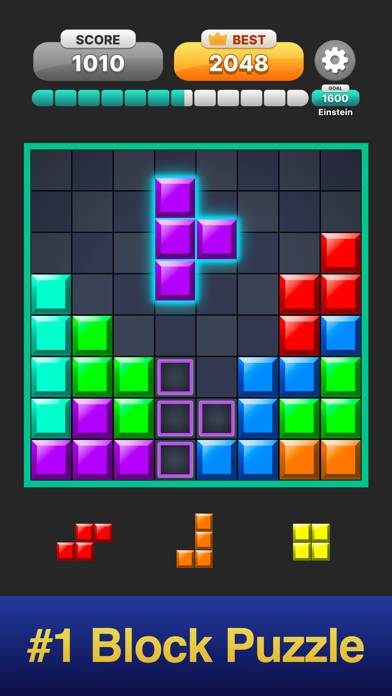
The developer describes placing blocks on a grid and clearing a completed line across it. The goal is to clear as many lines as possible and beat a personal high score. The wooden presentation is part of the marketing, while the underlying decision is spatial.
Each placement uses some empty cells and potentially contributes to a future clear. Those are competing needs. A placement that helps finish a line can be useful, but only if the remaining grid can still accommodate the next shapes.
A helpful way to assess the premise is to imagine leaving a narrow, awkward gap beside a nearly completed line. That gap may be harder to use than a larger open area elsewhere. This is a general implication of fitting shapes, not evidence about the actual piece sequence or a proven optimal strategy.
The supplied text does not specify grid dimensions, whether blocks rotate, or whether rows and columns both clear. It also does not establish a falling-piece system, a move limit, or a countdown. Those are meaningful differences between games that otherwise share the same genre label.
References to other wooden or hexagonal puzzles are promotional comparisons, not confirmation that this game uses a hexagon board. Its actual instructions describe blocks on a grid. Likewise, playing daily to improve a score does not automatically establish daily challenge levels or a streak reward system.
That limited rulebook is important for fit. If you mainly want an approachable shape-placement pastime, the concept is easy to understand. If a particular rotation rule or board size determines your enjoyment, this evidence is not enough to settle the choice.
The US metadata records a free download. No usable review bodies are included, and the description does not document advertisements, purchases, or a removal product. It would be inappropriate to infer player enthusiasm from the rating aggregate or promise quiet sessions from the wooden theme.
Claims about daily brain training are also not evidence of measurable benefits beyond practicing this kind of puzzle.
Block Puzzle · is most relevant to players seeking a simple score-chasing placement game. It is not a strong evidence-based choice for anyone who needs a fully specified variant before downloading. The line-clearing premise is clear; the rules that distinguish it from its neighbors remain thinly documented.
View the official US App Store listing · How evidence differs from playtesting
No gameplay, ad, purchase, offline, or stability testing performed.
Gameplay was not playtested. Default score 7.0. This dimension was not playtested, and the default is what the ranking uses.
Ads were not playtested, and this game has no separate store-ad sample. The no-forced-ads tag stays unknown. Default score 7.0. This dimension was not playtested, and the default is what the ranking uses.
Whether a purchase is required to keep playing was not playtested. Default score 7.0. This dimension was not playtested, and the default is what the ranking uses.
Content depth was not playtested. Default score 7.0. This dimension was not playtested, and the default is what the ranking uses.
Stability was not playtested. Default score 7.0. This dimension was not playtested, and the default is what the ranking uses.
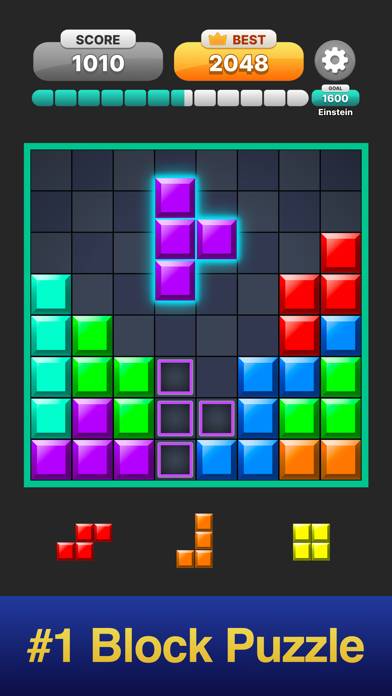
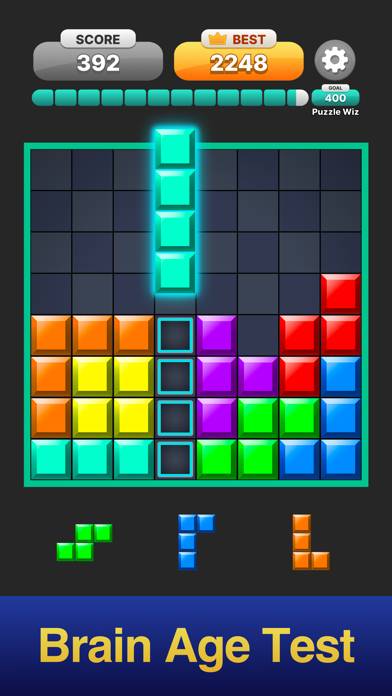
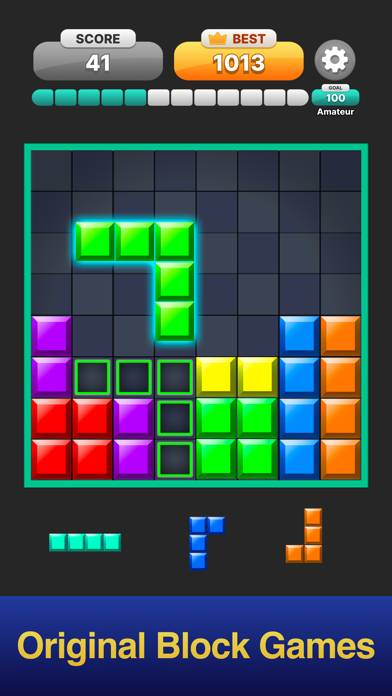
Place blocks, clear completed lines, and improve your high score.
No. The supplied description does not give its dimensions.
That rule is not established in the listing evidence.
The text describes placement, not a verified continuous falling-piece system.