G
7.0
Gameplay 30%
Gameplay was not playtested. Default score 7.0. This dimension was not playtested, and the default is what the ranking uses.


Home / Reviews / dot-connection / Two Dots - Connect the Colors
Two Dots looks most suitable for players who enjoy spotting a board-changing opportunity within a simple connection rule. It is a less certain fit for someone choosing purely on a promise of free, unlimited, quiet play. The square mechanic is the strongest documented attraction, while extra modes and the purchase economy need their own consideration.
Opens the official store and leaves this site. Kids: ask a grown-up before buying anything.
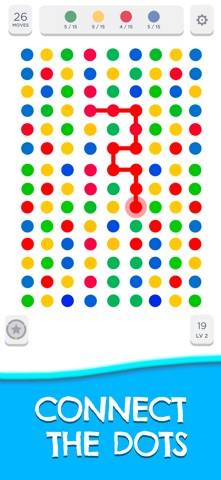
Two Dots has a useful rule to understand before downloading: making a square clears every dot of that color, not just the dots around its edge. That gives a simple connection game a larger planning target. This source-based analysis uses the US App Store listing, not hands-on play.
The listing describes drawing lines through matching colors. Completing a square removes all dots of that color from the board, creating an incentive beyond the longest immediately available chain.
That can make a small local arrangement important to the whole field. A player may choose between clearing a useful line now and preserving the possibility of a square later. The supplied text does not establish every adjacency restriction or obstacle interaction, so this is a reading of the stated rule rather than a complete strategy guide.
The distinction also separates it from a standard gem-swapping match-3 game. The core input is connecting dots, not exchanging two neighboring pieces.
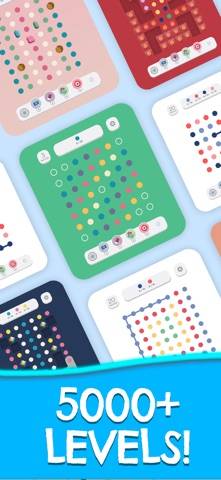
The developer advertises Scavenger Hunts, Arcade, Flip, Treasure Hunt, and Rewind activities. Arcade is specifically associated with racing a clock. That does not mean every mode is timed.
Those alternatives may suit someone who likes changing pace, but the supplied description does not fully document their rules or availability. A large mode list is not independent evidence that each one has equal depth or remains accessible indefinitely.
A free colorblind setting is a more concrete option worth noting. Its presence does not establish actual readability for every player because the interface was not inspected. It is a feature claim rather than an accessibility certification.
The US listing says the game is free to play and offers in-app purchases, including randomized items. That disclosure matters even without a verified price list: buying a randomized item is not the same as purchasing one guaranteed, specifically chosen result.
The evidence does not establish forced-ad frequency, removal terms, or the fairness of later stages. No customer-review bodies are available in this collection, so player praise or complaints cannot be supplied from the overall rating.
Offline behavior and stability also remain untested. The calm presentation should not be treated as proof of uninterrupted use.
Two Dots looks most suitable for players who enjoy spotting a board-changing opportunity within a simple connection rule. It is a less certain fit for someone choosing purely on a promise of free, unlimited, quiet play. The square mechanic is the strongest documented attraction, while extra modes and the purchase economy need their own consideration.
View the official US App Store listing · How evidence differs from playtesting
No gameplay, ad, purchase, offline, or stability testing performed.
Gameplay was not playtested. Default score 7.0. This dimension was not playtested, and the default is what the ranking uses.
Ads were not playtested, and this game has no separate store-ad sample. The no-forced-ads tag stays unknown. Default score 7.0. This dimension was not playtested, and the default is what the ranking uses.
Whether a purchase is required to keep playing was not playtested. Default score 7.0. This dimension was not playtested, and the default is what the ranking uses.
Content depth was not playtested. Default score 7.0. This dimension was not playtested, and the default is what the ranking uses.
Stability was not playtested. Default score 7.0. This dimension was not playtested, and the default is what the ranking uses.
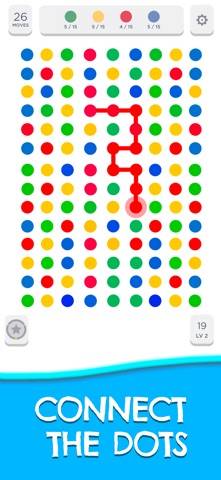
The listing says it clears all dots of that color from the board.
No universal timer is established; Arcade is specifically described as clock-based.
Yes. The developer describes it as free.
Yes. Randomized in-app items are explicitly disclosed.