G
7.0
Gameplay 30%
Gameplay was not playtested. Default score 7.0. This dimension was not playtested, and the default is what the ranking uses.


Home / Reviews / traffic-sequencing / Traffic Escape!

Consider Traffic Escape for coordinating arrow-marked vehicle routes. Skip it if you need a proven untimed, penalty-free puzzle or if driving simulation—not sequencing taps—is what you want.
Opens the official store and leaves this site. Kids: ask a grown-up before buying anything.
Store-listing analysis, not a playtest. This article examines the US App Store description and attributed product claims. Customer review sample: N=0; no review date or version window is available.
Traffic Escape! turns a traffic jam into a question of order. Read the arrow on a vehicle, check its route, and decide whether releasing it will clear space or create a collision.
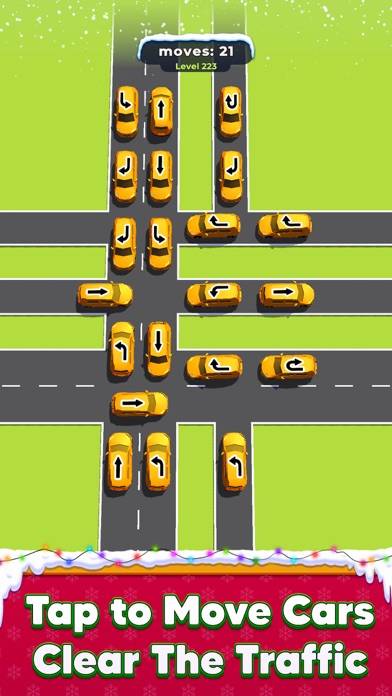
The description says arrows above vehicles indicate their paths. Tapping sends a car in its direction, with other vehicles along the route creating the problem. The task is therefore not conventional steering: you decide when a predefined movement is safe.
This gives every release a second effect. A vehicle leaves its own position, potentially opening a route for another. Planning the dependency between cars is more informative than simply identifying the nearest road edge.
The developer describes intersections, narrow passages, bigger jams, and different vehicle sizes. Those elements suggest changing congestion patterns, but the listing does not provide exact dimensions, priority rules, or a full collision-penalty system. It would be premature to prescribe specific timings or a universal escape sequence.
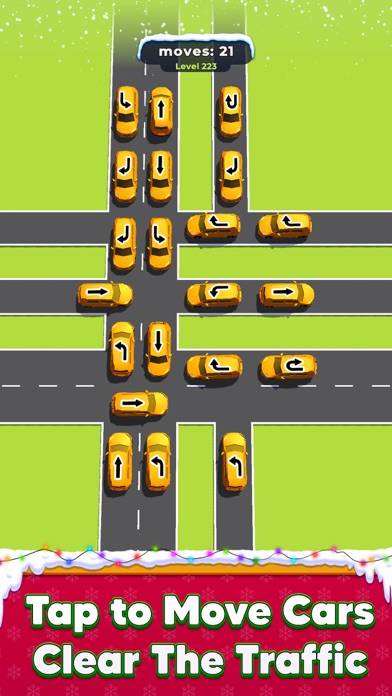
The official road image uses arrows directly on yellow vehicles and displays a move counter. That makes both route direction and a finite action display visible without explaining every budget rule.
The description repeatedly emphasizes timing, quick decisions, and reacting to traffic. It does not explicitly establish a countdown, but neither does it support a blanket no-pressure recommendation. Readers who like inspecting a completely static board should notice that action-oriented framing.
Conversely, someone who enjoys coordinating several visible routes may find the arrow information appealing. The board appears to tell you where a vehicle intends to go, making route checking the advertised task rather than guessing an arbitrary destination.
Traffic Escape is relevant to fans of dependency puzzles who like vehicles as a readable theme. It is a weaker fit for anyone seeking an open-world driving game, realistic road laws, or a detailed transport-management simulator. The stated objective is removing the jam through taps.
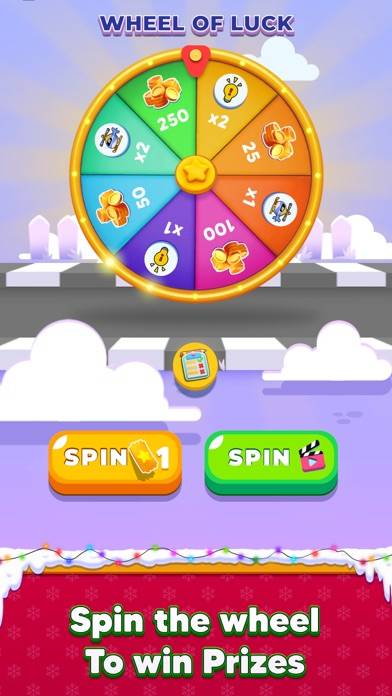
The US listing offers a free download. Advertising frequency, optional purchases, offline operation, level-retry costs, and the exact consequence of a crash are not established. There are no customer review bodies in this sample to show whether players find the timing forgiving or the controls accurate.
The strongest reason to investigate is the visible relationship between arrows, occupied routes, and release order. General claims of sharper skills or heart-racing fun are not substitutes for those specific mechanics.
Consider Traffic Escape for coordinating arrow-marked vehicle routes. Skip it if you need a proven untimed, penalty-free puzzle or if driving simulation—not sequencing taps—is what you want.
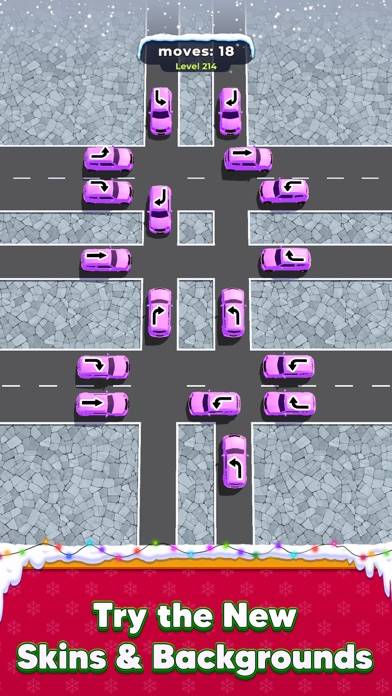
The listing says arrows above cars show the direction or path to check before tapping them.
The described action is tapping vehicles to send them along indicated routes, not continuous steering.
The description emphasizes timing and quick reactions but does not specify a universal countdown rule.
No hands-on gameplay, advertising, purchase, offline, or stability testing.
Gameplay was not playtested. Default score 7.0. This dimension was not playtested, and the default is what the ranking uses.
Ads were not playtested, and this game has no separate store-ad sample. The no-forced-ads tag stays unknown. Default score 7.0. This dimension was not playtested, and the default is what the ranking uses.
Whether a purchase is required to keep playing was not playtested. Default score 7.0. This dimension was not playtested, and the default is what the ranking uses.
Content depth was not playtested. Default score 7.0. This dimension was not playtested, and the default is what the ranking uses.
Stability was not playtested. Default score 7.0. This dimension was not playtested, and the default is what the ranking uses.
The listing says arrows above cars show the direction or path to check before tapping them.
The described action is tapping vehicles to send them along indicated routes, not continuous steering.
The description emphasizes timing and quick reactions but does not specify a universal countdown rule.