G
7.0
Gameplay 30%
Gameplay was not playtested. Default score 7.0. This dimension was not playtested, and the default is what the ranking uses.


Home / Reviews / triple-tile-layered-buffer / Tile Garden: Relaxing Puzzle

Tile Garden looks most relevant to readers who enjoy completing triples while planning around what lies underneath. It is less conclusive for someone selecting specifically for a known tray capacity or unrestricted recovery tools. The layered-reveal rule is clear; the exact selection limit and access economy still need confirmation.
Opens the official store and leaves this site. Kids: ask a grown-up before buying anything.
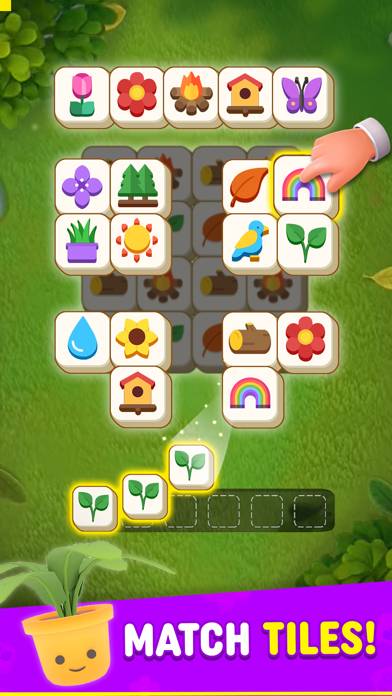
Tile Garden uses triple matching and hidden layers rather than ordinary Mahjong pairs. Its most important rule is the risk of selecting too many unrelated tiles before completing a set. This source-based analysis uses the US App Store listing, not hands-on play.
The developer says matching three tiles exposes additional tiles beneath them. Clearing the whole arrangement completes the task, while too many unmatched selections force a restart.
That creates a dependency between what is available now and what a match will expose. A useful selection is not simply one whose artwork you recognize; it should contribute toward a set before unmatched choices accumulate.
The supplied description does not specify the exact selection capacity. A seven-slot rule common in some triple games should not be imported here. It also does not fully explain which covered tiles are selectable or how the collection area is arranged.
More than 50 tile styles, including flowers, leaves, and animals, are advertised. Gardens, mountains, and other landscapes provide a surrounding setting.
Those features can offer visual change without necessarily changing the underlying rule. Someone who enjoys repeated recognition and planning may value that familiarity; someone seeking a radically different puzzle every stage may want more evidence of mechanical variety.
No screenshot was visually inspected. Actual symbols, contrast, tile size, and scenic detail are therefore not independently described. The listing's claim of fresh daily challenges is not a verified release schedule.
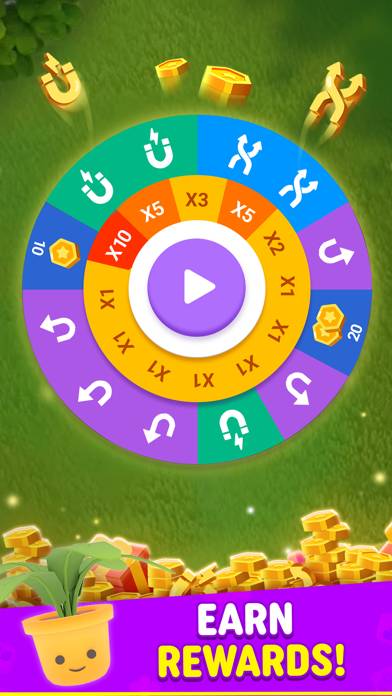
The developer advertises unlockable powerups but does not name their full effects, costs, or limits. They should not become a promise of free undo, unlimited hints, or a guaranteed rescue from every crowded selection area.
The garden-kingdom language also does not establish an open-ended construction simulator. The detailed instructions remain about matching tiles and revealing layers.
No usable customer-review bodies are available in the supplied evidence. There is no supported player verdict about difficulty, repeated boards, visual comfort, or the balance of assistance.
The metadata records a free download. Advertising frequency, removal offers, offline support, timers, and stability remain unverified. Relaxing presentation does not independently establish untimed operation or cognitive benefits.
Tile Garden looks most relevant to readers who enjoy completing triples while planning around what lies underneath. It is less conclusive for someone selecting specifically for a known tray capacity or unrestricted recovery tools. The layered-reveal rule is clear; the exact selection limit and access economy still need confirmation.
View the official US App Store listing · How evidence differs from playtesting
No gameplay, ad, purchase, offline, or stability testing performed.
Gameplay was not playtested. Default score 7.0. This dimension was not playtested, and the default is what the ranking uses.
Ads were not playtested, and this game has no separate store-ad sample. The no-forced-ads tag stays unknown. Default score 7.0. This dimension was not playtested, and the default is what the ranking uses.
Whether a purchase is required to keep playing was not playtested. Default score 7.0. This dimension was not playtested, and the default is what the ranking uses.
Content depth was not playtested. Default score 7.0. This dimension was not playtested, and the default is what the ranking uses.
Stability was not playtested. Default score 7.0. This dimension was not playtested, and the default is what the ranking uses.
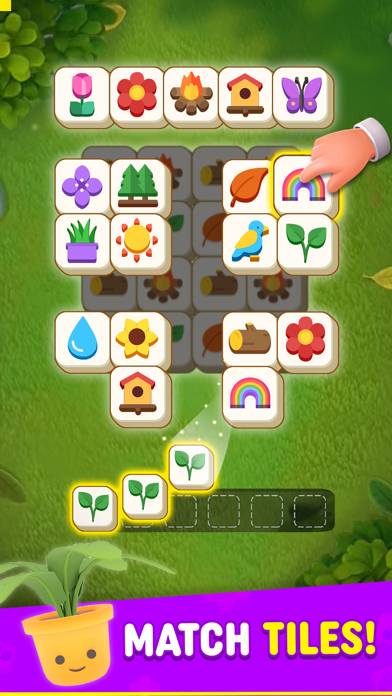
Three, according to the listing.
Additional tiles underneath.
No. The description only warns about too many unmatched selections.
No. Relaxation language does not establish a timer rule.