G
7.0
Gameplay 30%
Gameplay was not playtested. Default score 7.0. This dimension was not playtested, and the default is what the ranking uses.


Home / Reviews / 3d-directional-cube-removal-story / Take Away - Tap 3D Blocks Out

Take Away is relevant to readers who enjoy viewing an object from several angles and choosing a removal order. It is less conclusive for someone expecting the older error tolerance or minimal presentation described by longtime players. The mechanics, visual changes, and story pace all affect the calm experience the listing promotes.
Opens the official store and leaves this site. Kids: ask a grown-up before buying anything.
Take Away asks players to find cubes whose arrow directions lead to an exit. Its sample repeatedly describes a change in how mistakes are counted, making the same spatial task feel less forgiving to established players. This source-based review combines the US App Store listing with player reports; it is not a hands-on playtest.
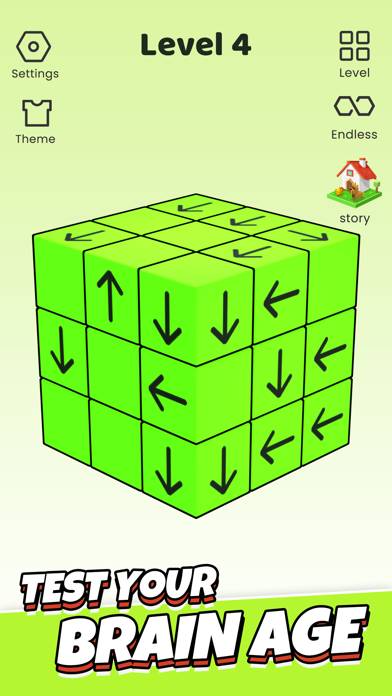
The developer says cubes leave only along their arrow direction. Rotating and zooming the arrangement helps identify movable pieces, while bombs provide assistance.
The listing describes clearing a board within limited moves. Story scenes add item collection and rebuilding projects such as a farm or living room. That is an extra progression frame, not evidence of a fully open construction game.
The description does not fully document every current error, life, and move allowance.
Reviewers in this sample contributed 50 US App Store reviews dated 2025-10-16 through 2026-09-04 (Asia/Shanghai), covering versions 1.4.90, 1.5.50, 1.5.60, 1.5.70; the listing records version 1.5.70. Apple's most-recent RSS sample is capped at 50 and self-selected, not representative of all players or a live consensus. These are player reports, not independently verified findings.
Some reviewers enjoy a manageable challenge or like how the story leads into more puzzles. Others describe a move budget being replaced by a small allowance for errors. Those are reported changes, not independently verified universal rules.
The distinction matters: estimating total efficient moves is different from avoiding accidental taps on a dense arrangement. Reviewers specifically connect the latter to finger size and visibility.
Several dislike bombs clearing pieces they wanted to remove themselves. Others object to altered themes or extra visual activity. Assistance can reduce challenge while still making a favorite routine less appealing.
Some players report finishing available stories and waiting for additions. Their waits do not establish that development is abandoned or identify a current total.
Advertising complaints concern midgame breaks, reward choices that still lead to an ad, and difficult exits. A reviewer who cannot find paid removal does not prove that every account lacks an offer. Current prices, offline access, and stability remain unverified.
Take Away is relevant to readers who enjoy viewing an object from several angles and choosing a removal order. It is less conclusive for someone expecting the older error tolerance or minimal presentation described by longtime players. The mechanics, visual changes, and story pace all affect the calm experience the listing promotes.
View the official US App Store listing · How evidence differs from playtesting
No gameplay, ad, purchase, offline, or stability testing performed.
Gameplay was not playtested. Default score 7.0. This dimension was not playtested, and the default is what the ranking uses.
Ads were not playtested, and this game has no separate store-ad sample. The no-forced-ads tag stays unknown. Default score 7.0. This dimension was not playtested, and the default is what the ranking uses.
Whether a purchase is required to keep playing was not playtested. Default score 7.0. This dimension was not playtested, and the default is what the ranking uses.
Content depth was not playtested. Default score 7.0. This dimension was not playtested, and the default is what the ranking uses.
Stability was not playtested. Default score 7.0. This dimension was not playtested, and the default is what the ranking uses.
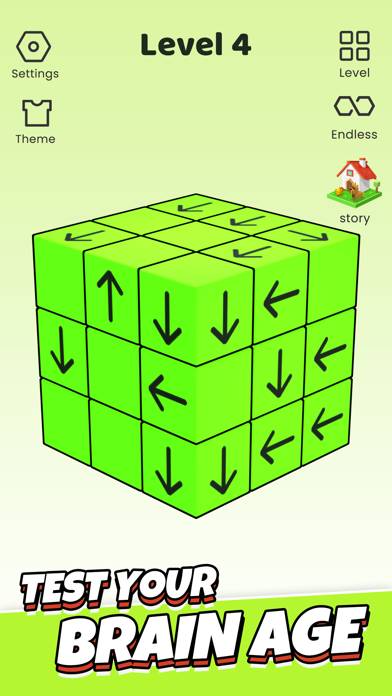
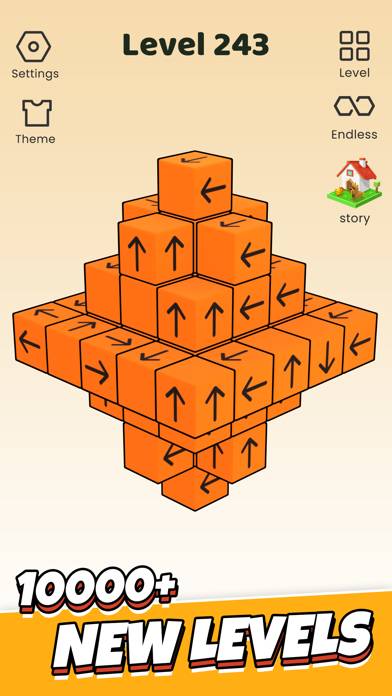
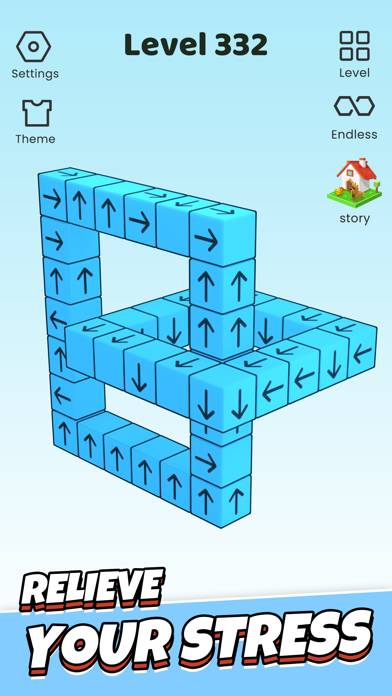
No. The listing restricts them to their arrows.
Yes, to inspect the arrangement.
No. Reviewers report changes, while the listing describes limited moves.
No. Some reviewers prefer clearing the pieces themselves.