G
7.0
Gameplay 30%
Gameplay was not playtested. Default score 7.0. This dimension was not playtested, and the default is what the ranking uses.


Home / Reviews / classic-sudoku-notes / Sudoku by Staple Games
This Sudoku app looks most relevant to readers who want clearly stated classic rules, notes, and a daily objective. It is less conclusive for someone whose priority is explanatory teaching or verified advanced difficulty. The compact feature set is concrete, while the assistance depth and access economy remain untested.
Opens the official store and leaves this site. Kids: ask a grown-up before buying anything.
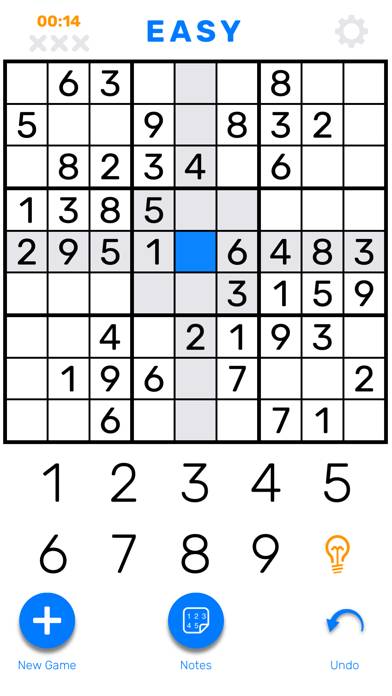
Sudoku by Staple Games is unusually direct about the puzzle it offers. The listing specifies the standard nine-by-nine constraints and a small collection of assistance features, rather than relying only on a brain-training slogan. This source-based analysis uses the US App Store listing, not hands-on play.
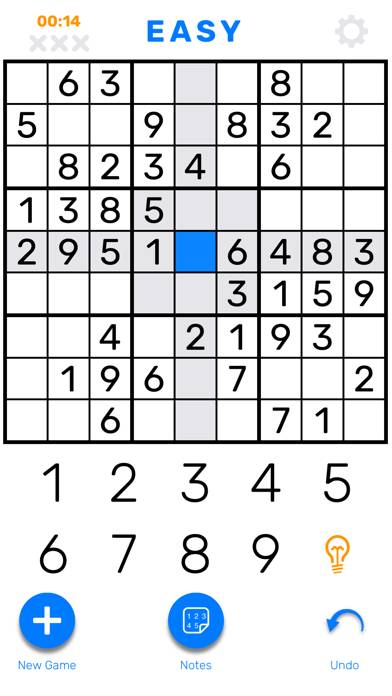
The objective is filling a nine-by-nine grid so every row, column, and three-by-three box contains each digit from one through nine. A valid candidate must respect all three regions at once.
That makes Sudoku a constraint problem rather than arithmetic. Adding the numbers is not the stated task; determining where each can legally appear is.
The supplied description does not document advanced solving techniques, puzzle-generation methods, or how many completed boards are included. Those omissions do not undermine the clear basic rule, but they limit comparison with specialist Sudoku libraries.
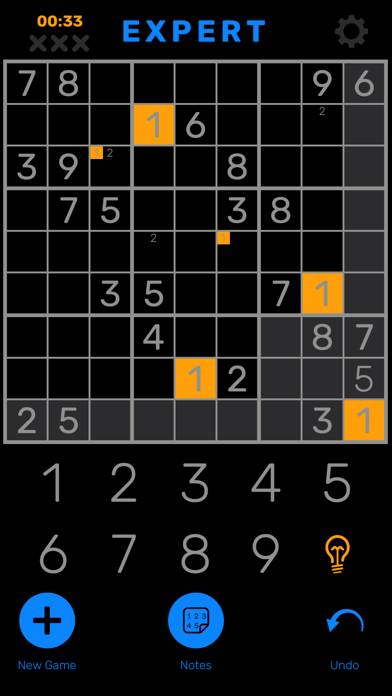
Notes track possible numbers for a cell. The listing also says a number is removed when all nine instances have been placed, helping distinguish a completed digit from one still needed elsewhere.
Those features can reduce bookkeeping without explaining the logical step that proves a candidate. The description does not specify automatic note cleanup, conflict highlighting, or which actions affect statistics.
Hints are described as filling a missing number when the player is stuck. That is not the same promise as a step-by-step explanation. A reader looking specifically for technique instruction should not be told the app supplies it.
Easy, medium, hard, and expert are advertised, along with a daily challenge and statistics. The text does not explain the techniques required for each label or establish that expert matches another app's standard.
Someone who wants a compact daily routine may value that structure. Someone seeking named strategy lessons or a highly configurable error system has less documented support.
No customer-review bodies are available here. There is no supported player verdict about puzzle quality, difficulty consistency, readability, or control responsiveness. No screenshot was inspected to assess the claimed modern, distraction-reducing layout.
The metadata records a free app. Advertising frequency, removal offers, hint costs, offline support, and stability are not specified in the supplied description. A simple presentation does not establish an ad-free session.
This Sudoku app looks most relevant to readers who want clearly stated classic rules, notes, and a daily objective. It is less conclusive for someone whose priority is explanatory teaching or verified advanced difficulty. The compact feature set is concrete, while the assistance depth and access economy remain untested.
View the official US App Store listing · How evidence differs from playtesting
No gameplay, ad, purchase, offline, or stability testing performed.
Gameplay was not playtested. Default score 7.0. This dimension was not playtested, and the default is what the ranking uses.
Ads were not playtested, and this game has no separate store-ad sample. The no-forced-ads tag stays unknown. Default score 7.0. This dimension was not playtested, and the default is what the ranking uses.
Whether a purchase is required to keep playing was not playtested. Default score 7.0. This dimension was not playtested, and the default is what the ranking uses.
Content depth was not playtested. Default score 7.0. This dimension was not playtested, and the default is what the ranking uses.
Stability was not playtested. Default score 7.0. This dimension was not playtested, and the default is what the ranking uses.
No. The task is placing digits under row, column, and box constraints.
Four: easy, medium, hard, and expert.
No. The description says they fill a missing number.
No. The listing only establishes storing notes.