G
7.0
Gameplay 30%
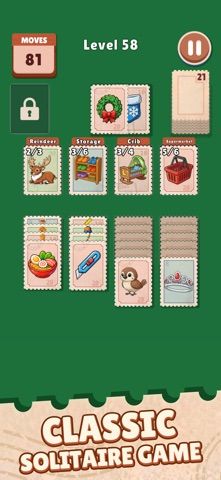
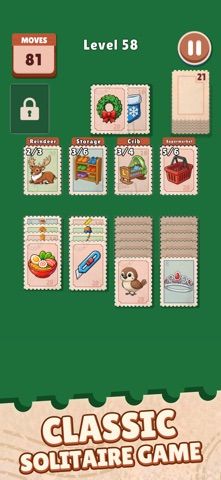
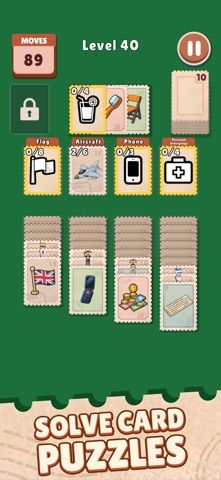
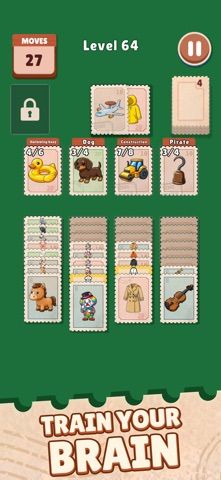
Screenshot impression 7.0/10: Stamp-pattern cards and “Classic solitaire” are clear, and the functional UI looks complete. Default score 7.0. This dimension was not playtested, and the default is what the ranking uses.


Home / Reviews / category-card-sort / Stamp Solitaire: Card Matching
Stamp Solitaire has a distinctive collecting wrapper for category organization. It is worth considering for that idea, but theme repetition, reported resets, and moves spent revealing cards could matter more than the attractive stamps.
Opens the official store and leaves this site. Kids: ask a grown-up before buying anything.
Player-review analysis, not a playtest. Sources: the US App Store listing and 50 US reviews dated 2026-09-27–2026-11-09 (Asia/Shanghai), covering versions 0.31.2, 0.32.1, 0.32.2, 0.33.2, 0.33.3, 0.34.1. This limited, self-selected sample is not representative; player reports are not independently verified.
Stamp Solitaire: Card Matching replaces suits and ranks with illustrated categories. Its appeal is recognizing which stamps belong together, then organizing the board into themed albums.
The listing describes drawing, revealing, and grouping stamps, with board clearance as the objective. Traditional solitaire is an influence, not a complete rules explanation: there is no basis for assuming alternating colors, descending ranks, or standard card foundations.
The meaningful decision is which category to develop and when to reveal another stamp. The description leaves the detailed move economy open, but reviewers supply a concern worth investigating: some say drawing a card and moving it each consume the available move allowance.
Reviewers describe relaxing organization and enthusiasm for the pictures. Others enjoy the idea enough to reach high levels, yet ask for additional categories because familiar themes recur. That is a content-variety criticism rather than evidence that everyone dislikes repeated imagery.
One account welcomes eventually receiving a Halloween update after previously being unable to find it. Another says progress was restored after an earlier loss. These updated statements matter: treating the oldest complaint in a review as its final conclusion would misrepresent both accounts.
A reviewer objects not to limited moves themselves, but to a draw counting against the budget. Another describes needing several ad extensions because revealing and placing cards are separate actions. These are reported experiences of the economy, not independently audited move rules.
Mid-round ads are another recurring complaint in the sample. A positive counterexample reports no ads at all, leaving the ad experience unresolved rather than universally established. One player also describes a suspicious browser redirect; that is a safety concern to take seriously, but not proof of a verified compromise of the app or its ad network.
Progress resets and launch failures appear across several versions. The restored-progress account prevents a simple claim that recovery never happens, while repeated loss reports remain relevant to anyone planning a long collection.
The US listing offers a free download. Current ad-removal coverage, assistance prices, and offline access are not established. Consider the game for category sorting, while checking whether the move budget and persistence behavior support the kind of relaxed collecting you want.
Stamp Solitaire has a distinctive collecting wrapper for category organization. It is worth considering for that idea, but theme repetition, reported resets, and moves spent revealing cards could matter more than the attractive stamps.
No. Its description focuses on grouping illustrated stamps into themed categories rather than a standard rank-and-suit game.
Some sampled reviewers say drawing or revealing a card consumes a move. These rules have not been independently tested.
The sample includes repeated loss reports and an account of later restoration. It does not establish a universal current resolution.
No hands-on gameplay, advertising, purchase, offline, or stability testing.
Screenshot impression 7.0/10: Stamp-pattern cards and “Classic solitaire” are clear, and the functional UI looks complete. Default score 7.0. This dimension was not playtested, and the default is what the ranking uses.
The US App Store lists a remove-ads purchase: Remove Ads ($7.99). Forced ads were not playtested, so the no-forced-ads tag stays unknown. The store lists a remove-ads purchase, so Ads is drawn from 4.5–6.5. Sampled Ads score 6.5. Not a playtest.
The US App Store lists in-app purchases: Coin 1 ($1.99); Fail Offer ($5.99); Coin 2 ($7.99); Remove Ads ($7.99); plus 6 more. Whether any purchase is required to keep playing was not playtested. Default score 7.0. This dimension was not playtested, and the default is what the ranking uses.
Store content note: The store describes it as “level progression.” The store page does not clearly state a fail state. Default score 7.0. This dimension was not playtested, and the default is what the ranking uses.
Stability was not played. Age rating shown on the store is 4+. App version on the listing is 0.34.1. Default score 7.0. This dimension was not playtested, and the default is what the ranking uses.
No. Its description focuses on grouping illustrated stamps into themed categories rather than a standard rank-and-suit game.
Some sampled reviewers say drawing or revealing a card consumes a move. These rules have not been independently tested.
The sample includes repeated loss reports and an account of later restoration. It does not establish a universal current resolution.