G
7.0
Gameplay 30%
Gameplay was not playtested. Default score 7.0. This dimension was not playtested, and the default is what the ranking uses.


Home / Reviews / layered-screw-color-sort / Screw Jam
Screw Jam is most relevant to players who enjoy tracing dependencies through layered structures and then organizing what comes out. It is less conclusive for someone whose preference depends on a precise storage limit or an untimed guarantee. The layer-and-obstacle concept is concrete; its balance and access conditions remain untested.
Opens the official store and leaves this site. Kids: ask a grown-up before buying anything.
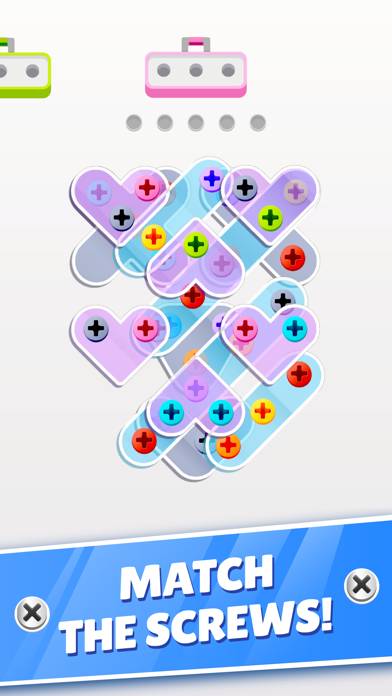
Screw Jam describes a combination of dismantling and sorting. Its most useful distinguishing claim is multilayered construction: choosing what to remove first can change what becomes accessible next. This source-based analysis uses the US App Store listing, not hands-on play.
The developer describes unscrewing pins, nuts, and bolts while matching colors and clearing a route through wooden structures. Multiple layers require a correct removal sequence.
That suggests a dependency puzzle rather than simply tapping every visible fastener in any order. Removing one item can reveal a layer or make another action possible. The description does not fully specify how destinations accept colors or how much temporary storage is available.
It would therefore be misleading to import the collection-box capacities or failure rules of another screw title. The actual claim is sequential removal with sorting, not a complete documented ruleset.
Rotating platforms and sliding pins are explicitly named, along with specialized tools for harder arrangements. Those features could require reconsidering a sequence as the structure changes, rather than only memorizing a static order.
The supplied text does not establish whether movement is continuous, triggered by a tap, or limited to particular stages. No claim about reaction speed or a fixed countdown follows automatically from a moving platform.
Hundreds of levels, an endless mode after the main challenges, and daily tasks are advertised. Those are developer claims, not an independently counted catalog. Endless mode also does not necessarily mean endless unique handcrafted arrangements.
The description says tools unlock and help with more difficult puzzles. It does not provide their costs, replenishment, or exact capabilities. A helper can be an optional convenience without proving the game is generous; its existence also does not prove every hard stage is paywalled.
No usable review bodies are available in the supplied evidence. There is no supported player verdict about later difficulty, responsiveness, repeated levels, or the usefulness of particular tools.
The metadata records a free download. Advertising frequency, paid removal, offline access, and stability remain unverified. No screenshot was visually inspected, so material finishes, fastener designs, and exact interface placement are not independently described.
Screw Jam is most relevant to players who enjoy tracing dependencies through layered structures and then organizing what comes out. It is less conclusive for someone whose preference depends on a precise storage limit or an untimed guarantee. The layer-and-obstacle concept is concrete; its balance and access conditions remain untested.
View the official US App Store listing · How evidence differs from playtesting
No gameplay, ad, purchase, offline, or stability testing performed.
Gameplay was not playtested. Default score 7.0. This dimension was not playtested, and the default is what the ranking uses.
Ads were not playtested, and this game has no separate store-ad sample. The no-forced-ads tag stays unknown. Default score 7.0. This dimension was not playtested, and the default is what the ranking uses.
Whether a purchase is required to keep playing was not playtested. Default score 7.0. This dimension was not playtested, and the default is what the ranking uses.
Content depth was not playtested. Default score 7.0. This dimension was not playtested, and the default is what the ranking uses.
Stability was not playtested. Default score 7.0. This dimension was not playtested, and the default is what the ranking uses.
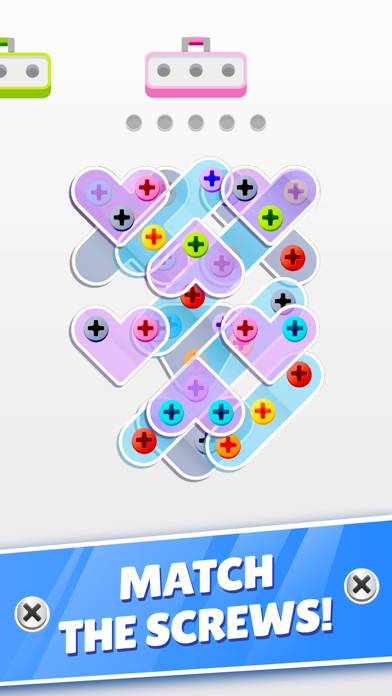

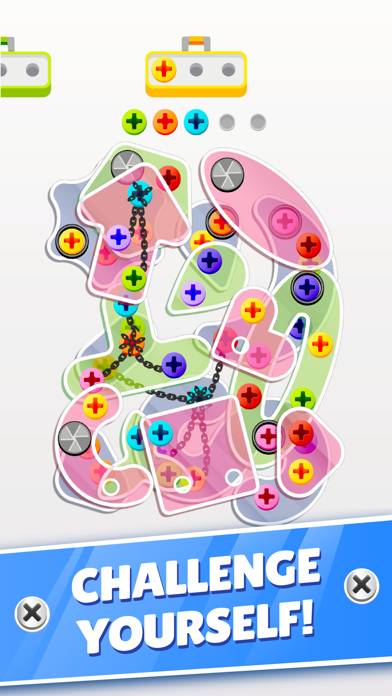
Yes. The listing explicitly describes layers requiring a correct sequence.
Yes, along with sliding pins.
No. Those details are not supplied.
No. It is an advertised feature, not an inspected mode.