G
7.0
Gameplay 30%
Gameplay was not playtested. Default score 7.0. This dimension was not playtested, and the default is what the ranking uses.


Home / Reviews / screw-removal-box-sort / Screw It Out!

Screw It Out! is most relevant to players interested in removal order combined with a box-assignment goal. It is less conclusive for someone choosing based on a specific color-tray system or forgiving recovery tools. The basic concept is identifiable; the constraints that would make a stronger recommendation remain thinly documented.
Opens the official store and leaves this site. Kids: ask a grown-up before buying anything.
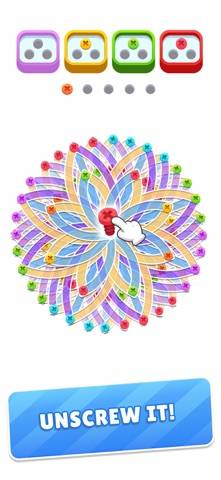
Screw It Out! gives its hardware puzzle a second destination. Removing a fastener is not enough by itself: the listing says the removed nuts must go into the right boxes to win. This source-based analysis uses the US App Store listing, not hands-on play.
The developer describes untwisting screws and placing nuts into appropriate boxes across hundreds of levels. A wrong move can create a jam, suggesting that the order of removal matters to continued progress.
The general appeal is a dependency puzzle. An available piece may be easy to remove but not necessarily the most useful next choice if its destination or the remaining arrangement becomes difficult.
That is a reading of the stated premise, not a tested account of the game's storage system. The supplied description does not specify box capacities, matching colors, temporary slots, or exactly how a jam occurs. Those familiar rules from other screw games should not be imported here.
The description uses pins, nuts, bolts, and screws somewhat interchangeably. It gives a clear dismantling theme without providing a technical simulation of real fasteners.
Someone who enjoys deciding what to remove next may like that premise. Someone looking for accurate mechanics, construction education, or a free-form tool simulator should not assume those features from the hardware language.
Likewise, a claim of bright, satisfying visuals is promotional rather than an independent visual assessment. No screenshot was inspected, so specific materials, colors, or plate arrangements are not described as observed details.
No customer-review bodies are available here. There is no supported player assessment of puzzle variety, responsiveness, or whether a failed sequence gives useful feedback.
The supplied text also does not establish hints, undo, a timer, or how a stage can be restarted. Those details affect whether experimentation feels forgiving or costly.
The metadata records a free download, but advertising frequency, purchases, removal offers, and offline support are not documented in the description. The promise of stress relief is an intended mood, not proof of an interruption-free session or a health benefit.
Screw It Out! is most relevant to players interested in removal order combined with a box-assignment goal. It is less conclusive for someone choosing based on a specific color-tray system or forgiving recovery tools. The basic concept is identifiable; the constraints that would make a stronger recommendation remain thinly documented.
View the official US App Store listing · How evidence differs from playtesting
No gameplay, ad, purchase, offline, or stability testing performed.
Gameplay was not playtested. Default score 7.0. This dimension was not playtested, and the default is what the ranking uses.
Ads were not playtested, and this game has no separate store-ad sample. The no-forced-ads tag stays unknown. Default score 7.0. This dimension was not playtested, and the default is what the ranking uses.
Whether a purchase is required to keep playing was not playtested. Default score 7.0. This dimension was not playtested, and the default is what the ranking uses.
Content depth was not playtested. Default score 7.0. This dimension was not playtested, and the default is what the ranking uses.
Stability was not playtested. Default score 7.0. This dimension was not playtested, and the default is what the ranking uses.
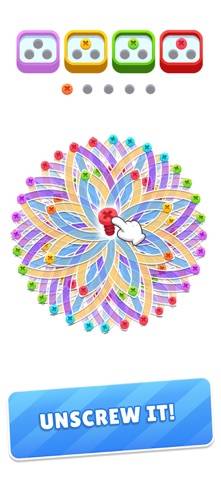
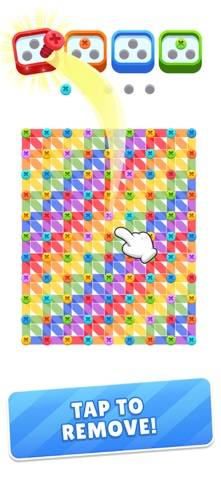

No. The listing also says to put the nuts into the right boxes.
No. Those exact rules are not provided.
The description presents a puzzle, not a documented mechanical simulation.
The supplied description does not explain those tools.