G
7.0
Gameplay 30%
Gameplay was not playtested. Default score 7.0. This dimension was not playtested, and the default is what the ranking uses.


Home / Reviews / block-sudoku-placement / Playdoku: Block Puzzle Game
Playdoku communicates its hybrid clearing rules clearly and gives Journey a meaningful no-replay boundary. Its listing supports thoughtful placement without a timer, but not a verdict about commercial interruptions or piece fairness.
Opens the official store and leaves this site. Kids: ask a grown-up before buying anything.
Store-listing analysis, not a playtest. This article examines the US App Store description and attributed product claims. Customer review sample: N=0; no review date or version window is available.
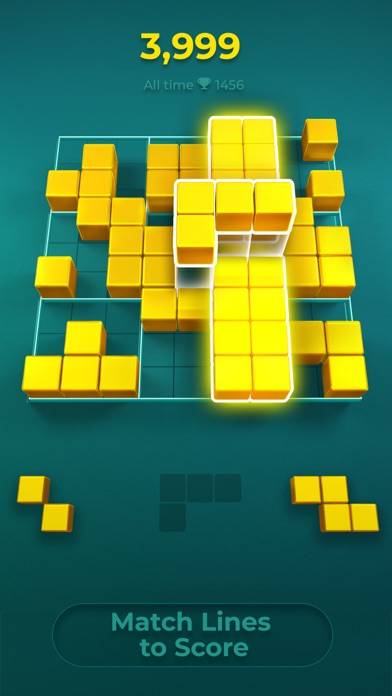
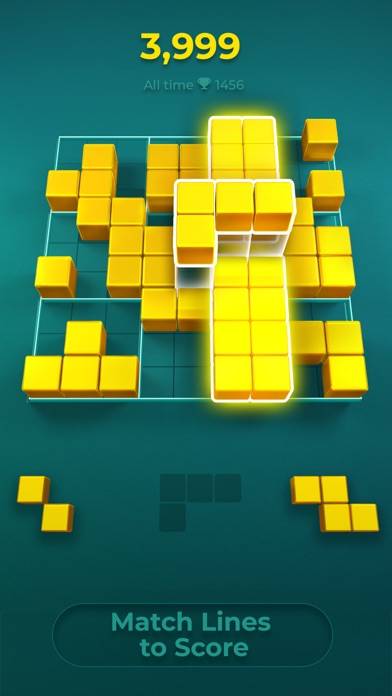
Playdoku: Block Puzzle Game combines shape placement with a sudoku-style subdivision of the board. Completing a line or a 3×3 area removes blocks, opening room for later pieces.
The developer instructs players to place blocks of different shapes and clear complete rows, columns, or 3×3 squares. No number-entry task is described.
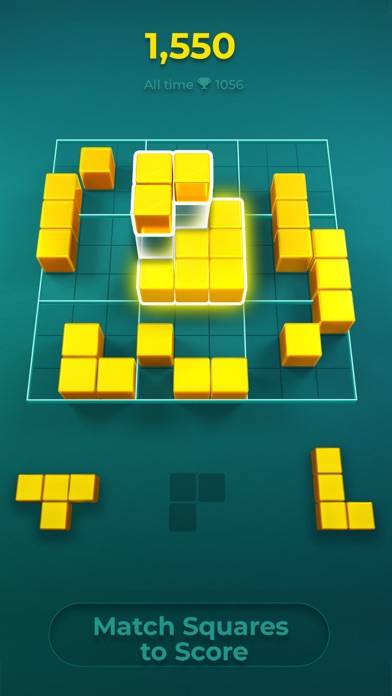
The official image shows yellow block shapes on a teal grid, with a score above and a line-clearing caption below. It supports the placement-and-clear premise without documenting every board dimension or piece rule.
The description repeatedly compares the game to Tetris. That is a genre analogy, not evidence that pieces fall automatically or can be rotated freely before placement.
Completing an area opens space, while the listing encourages combos and streaks for scoring. The useful planning question is where a shape leaves future placement room, not just whether it completes something immediately.
This is a rule-based selection consideration rather than a hands-on finding that the piece generator is generous or the game rewards every long-range plan.
The material does not fully specify the end condition, refresh schedule of available pieces, assistance tools, or whether rotation is paid. Those details cannot be borrowed from similarly named block apps.
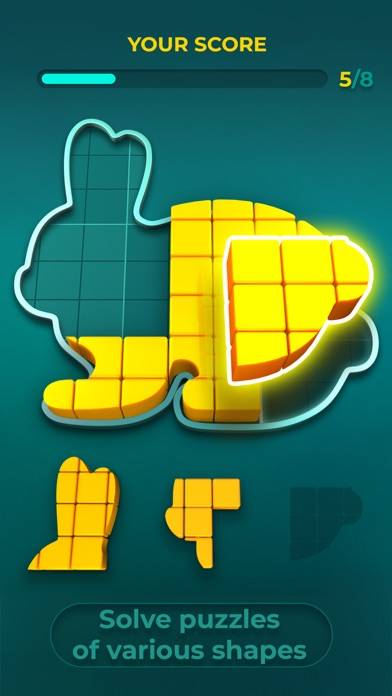
Classic is described as score-focused play at your own pace. Challenging mode increases difficulty, while Journey is a level-based progression.
The most specific restriction is that earlier Journey levels cannot be replayed to improve a score. That matters to readers who like perfecting past results rather than always advancing.
The developer expressly promotes no time limit. That supports an untimed proposition, not an independently tested absence of every clock or constraint in every future event.
Minimal design, saved progress, rating tables, and record comparison are advertised. There are no customer review bodies in this sample to confirm comfortable contrast, reliable resumption, or a consistently fair progression curve.
The US download is free. Ads, purchases, removal offers, offline support, and present stability remain unresolved. A clean promotional image is not evidence that the live interface has no commercial interruptions.
Consider Playdoku if clearing small square regions as well as long lines interests you. Readers seeking digit-based sudoku or replayable Journey score chasing should choose with those documented differences in mind.
Playdoku communicates its hybrid clearing rules clearly and gives Journey a meaningful no-replay boundary. Its listing supports thoughtful placement without a timer, but not a verdict about commercial interruptions or piece fairness.
No number-entry mechanic is documented. The sudoku connection is clearing 3×3 areas alongside rows and columns.
The developer explicitly says earlier Journey levels cannot be replayed to improve a score.
The listing says there is no time limit; this was not independently tested across modes.
No hands-on gameplay, advertising, purchase, offline, or stability testing.
Gameplay was not playtested. Default score 7.0. This dimension was not playtested, and the default is what the ranking uses.
Ads were not playtested, and this game has no separate store-ad sample. The no-forced-ads tag stays unknown. Default score 7.0. This dimension was not playtested, and the default is what the ranking uses.
Whether a purchase is required to keep playing was not playtested. Default score 7.0. This dimension was not playtested, and the default is what the ranking uses.
Content depth was not playtested. Default score 7.0. This dimension was not playtested, and the default is what the ranking uses.
Stability was not playtested. Default score 7.0. This dimension was not playtested, and the default is what the ranking uses.
No number-entry mechanic is documented. The sudoku connection is clearing 3×3 areas alongside rows and columns.
The developer explicitly says earlier Journey levels cannot be replayed to improve a score.
The listing says there is no time limit; this was not independently tested across modes.