Player-review digest, not a playtest. This analysis combines the US listing with 50 saved US App Store reviews dated 2026-10-29–2026-11-09 (Asia/Shanghai), covering versions 4.63.0, 6.4.0, 6.47.0, 6.48.0, 6.49.0. This self-selected sample is not a representative survey; player reports are not independently verified.
NYT Games is most persuasive as a daily puzzle routine rather than a single-game download. The saved reviewers value that routine, but access rules and interface problems can get between them and the next board.
Several distinct ways to think
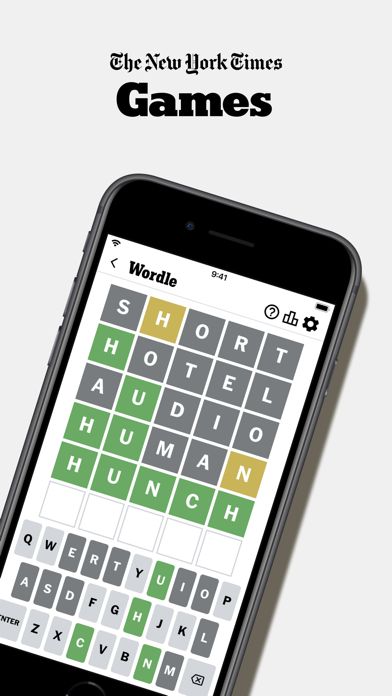
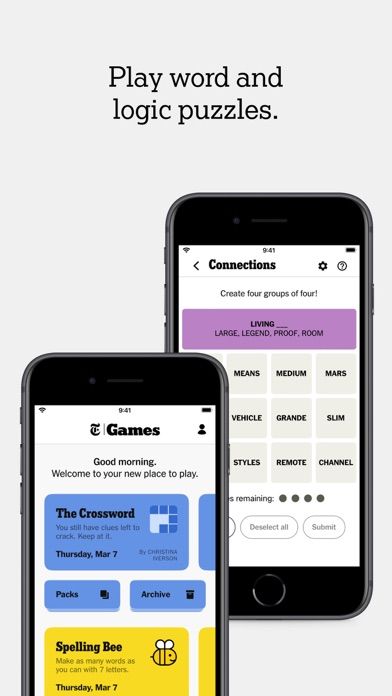
The listing includes Wordle’s five-letter guessing in six tries, Connections’ four groups drawn from 16 terms, and Spelling Bee’s word building from seven letters. Crossword options range from the Mini through the midsize Midi to the full daily grid, whose difficulty increases through the week.
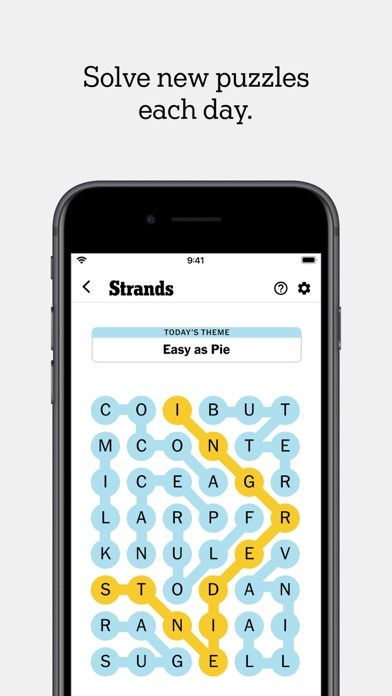
The collection also includes Sudoku, Strands, Pips, Tiles, and Letter Boxed. That variety is the useful distinction: you can switch from vocabulary to domino placement or pattern matching without selecting a completely separate app. Subscribers are advertised access to more than 10,000 past puzzles.
A routine people genuinely value
One long-time solver describes the attraction as relaxation combined with mental stimulation, particularly on harder crossword days. Another praises the variety and daily material. These support the app’s role in a continuing routine, not a scientific claim that daily puzzles improve cognition.
The frustrations are often practical rather than objections to puzzle solving. Reviewers report a shrunken or cut-off board after returning to the app, a problematic crossword keyboard, and slow loading on iPad. These reports span sample versions and devices; they are not confirmed universal defects.
Free download is not full access
The listing explicitly reserves archive access for subscribers. Some reviewers object to the Mini being behind a paywall, while others want more puzzles without subscribing. Their complaints do not establish the full current entitlement map or a reliable subscription price.
Repeated review requests are another distinct irritation. A separate account objects to upgrade offers for an All Access family plan. These prompts are not the same evidence as third-party video advertising, and they should not be collapsed into a generic ad-frequency claim.
One reviewer requests a Spelling Bee archive even though the listing advertises one. The discrepancy may reflect access or discovery, but its cause is not established. That is a reminder to check which features your account can actually reach rather than treating every complaint as a complete product inventory.
Verdict
Consider NYT Games if several daily formats would become a valued routine. Check access and device compatibility first; the sample identifies layout, loading, and promotion friction alongside strong appreciation of the puzzles.
Frequently asked questions
Is everything in NYT Games free?
No. The app is free to download, but the listing reserves archive access for subscribers, and reviewers describe additional paywall concerns.
Does the app include the Midi Crossword?
Yes. The saved listing advertises the Midi as a midsize option between the Mini and full Crossword.
How many guesses does Wordle allow?
The listing describes guessing a five-letter word in six tries or fewer.
View the US App Store listing.