G
7.0
Gameplay 30%
Gameplay was not playtested. Default score 7.0. This dimension was not playtested, and the default is what the ranking uses.



Home / Reviews / merge-orders-home-decoration / Mergedom: Home Design & Merge

Mergedom is most relevant to readers who want item-chain goals to fund a continuing room makeover. It is a more cautious choice for someone expecting completely unrestricted design control or long uninterrupted sessions. The sample's decoration appeal is specific, while access to working space and the frequency of forced breaks are its strongest qualifications.
Opens the official store and leaves this site. Kids: ask a grown-up before buying anything.
Mergedom connects item merging to home renovation. The sample's clearest divide is not whether decorating is appealing, but whether players can remain engaged with it through the interruptions. This source-based review combines the US App Store listing with player reports; it is not a hands-on playtest.
The listing describes combining items into tools, fulfilling customer orders, using boosters, and opening new rooms after completing an area. Tournaments and events add goals beyond the current makeover.
That gives a merge a purpose within a longer task. An item can be useful because it belongs to a chain needed for an order, not simply because combining it produces something new.
The supplied description does not fully specify how many items combine, generator cooldowns, or board capacity. Those common merge-game details should not be prescribed without further evidence.
Reviewers in this sample contributed 50 US App Store reviews dated 2026-05-25 through 2026-11-07 (Asia/Shanghai), covering versions 8.7.0, 8.7.3, 8.7.4, 8.7.5, 8.7.7; the listing records version 8.7.7. Apple's most-recent RSS sample is capped at 50 and self-selected, not representative of all players or a live consensus. These are player reports, not independently verified findings.
One reviewer says decorating makes the app interesting despite not generally liking merge games. Another finds the star-to-item relationship reasonable and likes the presentation.
A different player objects that certain task furniture has an assigned color scheme that clashes with the room. That is a useful qualification to the listing's complete-control language, but not an independently inspected limit on every decoration.
Other accounts request more board space or report disappearing items. These are individual experiences rather than a verified capacity rule or technical fault rate.
Several reviewers explicitly accept videos for extra items or shorter waits while objecting to ads appearing during ordinary merging. One says interruptions consume much of a timed benefit.
Those reports describe perceived impact, not measured frequencies or timer behavior. A critical account can still call the core game well made while rejecting that access pattern.
Current removal prices vary in reviewer recollections and were not independently checked. The listing advertises offline play, but no disconnected test establishes its scope or whether every event remains available.
References to outside reward apps also do not verify a cash-payout feature within Mergedom. Similarly, allegations of copied design are not an independent intellectual-property finding.
Mergedom is most relevant to readers who want item-chain goals to fund a continuing room makeover. It is a more cautious choice for someone expecting completely unrestricted design control or long uninterrupted sessions. The sample's decoration appeal is specific, while access to working space and the frequency of forced breaks are its strongest qualifications.
View the official US App Store listing · How evidence differs from playtesting
No gameplay, ad, purchase, offline, or stability testing performed.
Gameplay was not playtested. Default score 7.0. This dimension was not playtested, and the default is what the ranking uses.
Ads were not playtested, and this game has no separate store-ad sample. The no-forced-ads tag stays unknown. Default score 7.0. This dimension was not playtested, and the default is what the ranking uses.
Whether a purchase is required to keep playing was not playtested. Default score 7.0. This dimension was not playtested, and the default is what the ranking uses.
Content depth was not playtested. Default score 7.0. This dimension was not playtested, and the default is what the ranking uses.
Stability was not playtested. Default score 7.0. This dimension was not playtested, and the default is what the ranking uses.

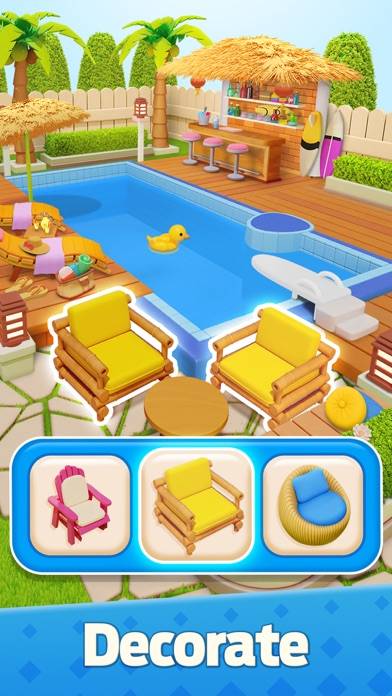
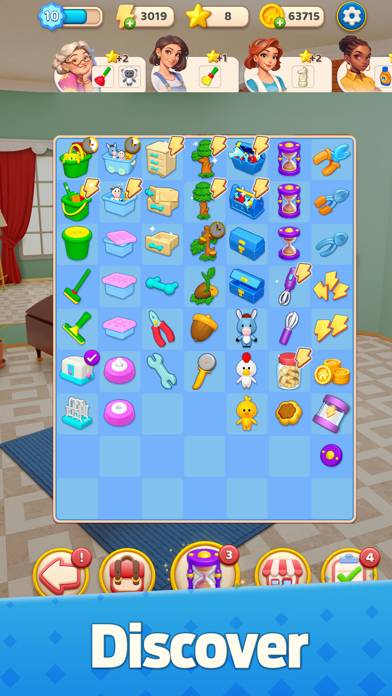
Customer orders and renovation progress, according to the listing.
No. A reviewer reports assigned colors for some task items.
That is not established; many reviewers describe forced interruptions.
No. It remains an attributed developer claim.