G
7.0
Gameplay 30%
Gameplay was not playtested. Default score 7.0. This dimension was not playtested, and the default is what the ranking uses.


Home / Reviews / garden-merge-plus-match3 / Merge Gardens

Merge Gardens looks most relevant to readers who want item evolution, a second board-puzzle format, and a continuing estate mystery. It is less conclusive for someone seeking pure unrestricted merging. The two-loop design is identifiable; the pace connecting those loops and the access economy remain untested.
Opens the official store and leaves this site. Kids: ask a grown-up before buying anything.
Merge Gardens offers two related puzzle activities rather than one renamed matching rule. Merging evolves objects, while separate match-3 boards earn rewards for Daisy's inherited estate. This source-based analysis uses the US App Store listing, not hands-on play.
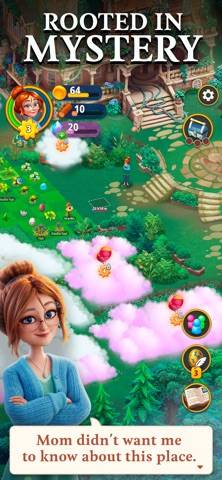
The developer specifies merging three identical items into a superior form. Items and creatures populate the garden, where clearing Evergrowth reveals additional areas and secrets.
That gives objects both immediate and future value. A group can supply an upgrade now, while the next evolution may require collecting more of the same chain. The supplied text does not document every item chain, placement limit, or larger-group bonus.
It would therefore be misleading to promise a five-item efficiency rule or a specific board capacity based on other merge games.
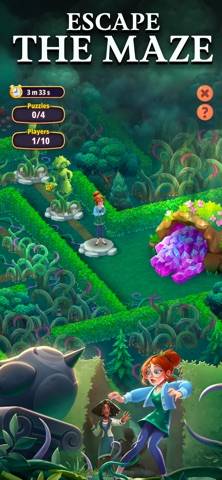
The listing separately advertises hundreds of match-3 levels, combinations of blocks, and rewards used in the garden. This is distinct from evolving three identical garden items.
Someone who enjoys switching between organization and discrete boards may find that combination attractive. Someone wanting a pure merge sandbox may be less interested in completing another puzzle format to support progress.
The text does not fully explain how often one activity gates the other. No player evidence supports calling the balance either generous or restrictive.
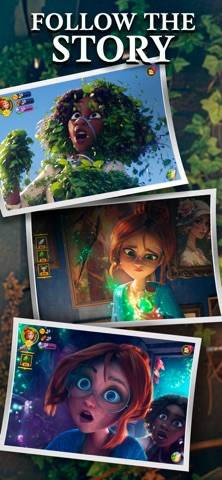
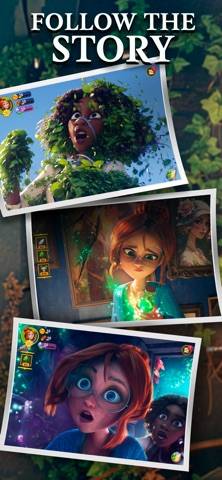
Daisy initially intends to prepare her missing uncle's estate for sale. Peculiar plants, human-shaped topiary, and family history give the garden a more mysterious role.
Those are narrative elements described by the developer, not independently observed scenes. No screenshot was inspected, and the writing quality or effectiveness of the story's reveals is not assessed.
Rare creatures and quests beyond the garden are also advertised. Their actual collecting pace and availability remain unverified; a broad catalog claim is not a tested inventory.
No usable customer-review bodies are available here. There is no supported player consensus about repetition, pacing, reward value, or late progression.
The metadata records a free download. The supplied description does not establish ads, removal terms, helper prices, energy systems, offline operation, or cross-device recovery. Those systems should not be supplied simply because they are common in garden games.
Merge Gardens looks most relevant to readers who want item evolution, a second board-puzzle format, and a continuing estate mystery. It is less conclusive for someone seeking pure unrestricted merging. The two-loop design is identifiable; the pace connecting those loops and the access economy remain untested.
View the official US App Store listing · How evidence differs from playtesting
No gameplay, ad, purchase, offline, or stability testing performed.
Gameplay was not playtested. Default score 7.0. This dimension was not playtested, and the default is what the ranking uses.
Ads were not playtested, and this game has no separate store-ad sample. The no-forced-ads tag stays unknown. Default score 7.0. This dimension was not playtested, and the default is what the ranking uses.
Whether a purchase is required to keep playing was not playtested. Default score 7.0. This dimension was not playtested, and the default is what the ranking uses.
Content depth was not playtested. Default score 7.0. This dimension was not playtested, and the default is what the ranking uses.
Stability was not playtested. Default score 7.0. This dimension was not playtested, and the default is what the ranking uses.
The listing explicitly describes three of a kind.
Yes. Its levels earn garden rewards.
No. That rule should not be borrowed from another game.
No. The supplied text does not document one.