G
7.0
Gameplay 30%
Gameplay was not playtested. Default score 7.0. This dimension was not playtested, and the default is what the ranking uses.


Home / Reviews / color-block-exit / Maze Escape: Block Puzzle

Maze Escape has specific supporters of untimed spatial reasoning. Its star formula and conflicting booster accounts deserve attention, while ad behavior cannot be reduced to a single universal experience.
Opens the official store and leaves this site. Kids: ask a grown-up before buying anything.
Player-review analysis, not a playtest. Sources: the US App Store listing and 50 US reviews dated 2026-09-16–2026-11-09 (Asia/Shanghai), covering versions 2.0.3–2.2.0. This limited, self-selected sample is not representative; player reports are not independently verified.
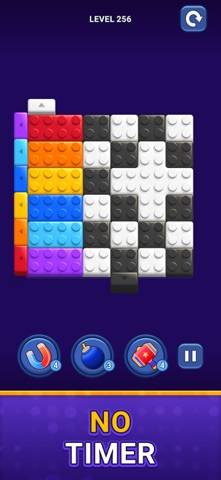
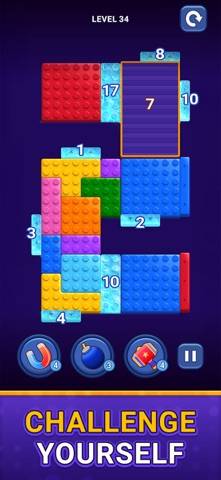
Maze Escape: Block Puzzle moves colored blocks toward matching exits, not into complete scoring lines. Each removal changes the room available for the pieces that remain.
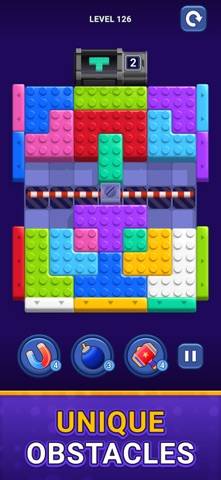
The listing says to slide each block to its same-colored outlet and clear the whole board. Frozen and locked blocks provide additional obstacles.
The official image shows a dense block layout with several tools beneath and a prominent no-timer caption. It supports spatial escape planning rather than a falling-piece survival board.
One reviewer enjoys considering color, position, and size before moving. Another likes the variety of movement patterns. Those are specific reasons to consider the puzzle beyond a generic relaxation label.
The developer expressly advertises no timer, and multiple reviewers welcome the absence of clock pressure. A contrasting account believes an unseen time measure reduces star awards.
That is not necessarily a deadline ending the level. Several reviewers simply do not understand how one to three stars are assigned. The exact grading formula is unresolved.
It would be misleading either to invent a hidden countdown or to guarantee that speed has no possible relationship to scoring. No independent grading test was performed.
The listing says every level is solvable through logic and boosters are optional. An October reviewer endorses that experience, while a November player near level 600 says no moves are available without power-ups.
Both accounts remain visible. Neither is an independent exhaustive solvability audit, and differences in stage or state may matter without proving a particular cause.
Historical reports of blocked advancement near levels 398 and 399 also remain unverified. One short positive entry explicitly says it had the wrong game in mind and is not used as firsthand support.
Some reviewers describe no interruptions or modest between-level ads. Others report pop-ups during play and banners covering tool buttons. A lower-ad comparison is relative, not proof of zero advertising.
The US download is free. The listing quotes VIP at $4.99 weekly, $9.99 monthly, or $49.99 yearly, and mentions a six-month term without a price. Current checkout and exact coverage were not tested.
Offline play is advertised, but current disconnected operation and stability remain unresolved. Consider Maze Escape for deliberate color-and-space planning, while keeping star transparency and late-board assistance expectations separate from its no-countdown appeal.
Maze Escape has specific supporters of untimed spatial reasoning. Its star formula and conflicting booster accounts deserve attention, while ad behavior cannot be reduced to a single universal experience.
No. Blocks are guided to matching colored exits.
No. A reviewer suspects time affects grades, which is different from a countdown ending the puzzle.
No. The listing and one reviewer say optional, while another reports needing them at a later stage.
No hands-on gameplay, advertising, purchase, offline, or stability testing.
Gameplay was not playtested. Default score 7.0. This dimension was not playtested, and the default is what the ranking uses.
Ads were not playtested, and this game has no separate store-ad sample. The no-forced-ads tag stays unknown. Default score 7.0. This dimension was not playtested, and the default is what the ranking uses.
Whether a purchase is required to keep playing was not playtested. Default score 7.0. This dimension was not playtested, and the default is what the ranking uses.
Content depth was not playtested. Default score 7.0. This dimension was not playtested, and the default is what the ranking uses.
Stability was not playtested. Default score 7.0. This dimension was not playtested, and the default is what the ranking uses.
No. Blocks are guided to matching colored exits.
No. A reviewer suspects time affects grades, which is different from a countdown ending the puzzle.
No. The listing and one reviewer say optional, while another reports needing them at a later stage.