G
7.0
Gameplay 30%
Gameplay was not playtested. Default score 7.0. This dimension was not playtested, and the default is what the ranking uses.


Home / Reviews / mahjong-solitaire-free-tiles / Mahjong Master-Fun Puzzle Game
Mahjong Master may suit players who want familiar pair clearing with a large-tile presentation and recovery tools. It is less conclusive for anyone relying on medical promises or verified accessibility. The sample's readability praise is useful precisely because it is specific; the broader health and interruption claims remain unverified.
Opens the official store and leaves this site. Kids: ask a grown-up before buying anything.
Mahjong Master presents tile matching as a deliberate logic challenge. Its strongest practical claim is readable, high-contrast tiles; its medical-sounding memory promises deserve a much more cautious reading. This source-based review combines the US App Store listing with player reports; it is not a hands-on playtest.
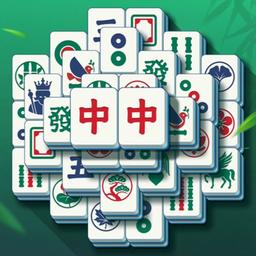
The listing describes matching pairs of free tiles that are not blocked on top or at the sides. Removing pairs progressively dismantles a layered arrangement until the board is clear.
The interesting choice is not merely recognizing identical symbols. Removing one available pair can expose different options from removing another, making the order relevant to avoiding a dead end.
Hints and undo are advertised as tools for learning or recovering from mistakes. Their exact limits and costs are not established in the supplied text, so they should not be presented as unlimited assistance.
Reviewers in this sample contributed 50 US App Store reviews dated 2026-10-27 through 2026-11-09 (Asia/Shanghai), covering versions 1.23.0, 1.24.0, 1.24.1; the listing records version 1.24.1. Apple's most-recent RSS sample is capped at 50 and self-selected, not representative of all players or a live consensus. These are player reports, not independently verified findings.
Many comments are brief expressions of enjoyment. More detailed accounts describe an appealing challenge for older players and clearly visible tiles. One reviewer specifically calls the game easy on the eyes.
Those comments support an intended audience fit, not a universal accessibility certification. Another reviewer says the actual tile appearance differs from what they expected from social-media promotion. No screenshot was inspected to resolve that visual comparison.
The sample gives less detail about late-game variety or the precise difficulty curve than the listing's broad progression claims might suggest.
The description promotes preventing memory loss and testing IQ. No clinical or standardized assessment evidence supports those outcomes here. A puzzle can be enjoyable mental activity without serving as a prevention or diagnostic tool.
One reviewer reports advertisements that finish but cannot be closed, requiring waiting or restarting. That is a specific player account, not an independently measured failure rate or proof of every account's experience.
The metadata records a free download. No current removal price, complete purchase list, or verified offline session is available. Offline play is advertised, but it should not automatically produce a no-forced-ads label.
Mahjong Master may suit players who want familiar pair clearing with a large-tile presentation and recovery tools. It is less conclusive for anyone relying on medical promises or verified accessibility. The sample's readability praise is useful precisely because it is specific; the broader health and interruption claims remain unverified.
View the official US App Store listing · How evidence differs from playtesting
No gameplay, ad, purchase, offline, or stability testing performed.
Gameplay was not playtested. Default score 7.0. This dimension was not playtested, and the default is what the ranking uses.
Ads were not playtested, and this game has no separate store-ad sample. The no-forced-ads tag stays unknown. Default score 7.0. This dimension was not playtested, and the default is what the ranking uses.
Whether a purchase is required to keep playing was not playtested. Default score 7.0. This dimension was not playtested, and the default is what the ranking uses.
Content depth was not playtested. Default score 7.0. This dimension was not playtested, and the default is what the ranking uses.
Stability was not playtested. Default score 7.0. This dimension was not playtested, and the default is what the ranking uses.
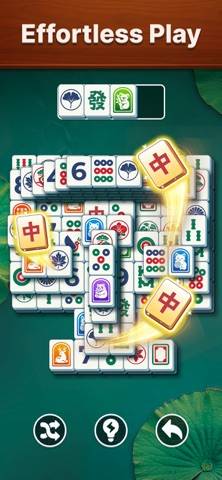
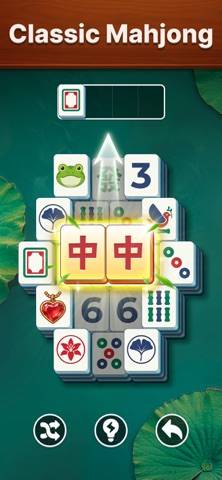
The listing describes tiles free from blocking above and at the sides.
Yes, though their full access terms are not documented.
No. The evidence does not support a medical prevention claim.
No. A specific failure report does not establish every player's experience.