G
7.0
Gameplay 30%
Gameplay was not playtested. Default score 7.0. This dimension was not playtested, and the default is what the ranking uses.


Home / Reviews / photo-card-assembly / Jigsolitaire
Jigsolitaire has a distinct card-connection mechanic and specific supporters of its photographs. Caption requests reveal genuine engagement, while challenge costs and advertising reports qualify the relaxing-picture proposition.
Opens the official store and leaves this site. Kids: ask a grown-up before buying anything.
Player-review analysis, not a playtest. Sources: the US App Store listing and 50 US reviews dated 2026-08-31–2026-11-08 (Asia/Shanghai), covering versions 1.2.2–1.2.5. This limited, self-selected sample is not representative; player reports are not independently verified.
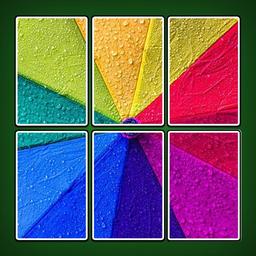
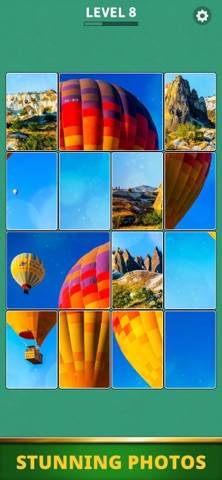
Jigsolitaire assembles photographs from rectangular cards. Its solitaire name does not mean sorting suits: pieces that match spatially snap together and can then move as a connected group.
The developer explicitly describes group movement and warns that overlapping a smaller card on a larger one can shrink the larger card. Watching size changes is therefore part of the stated rule.
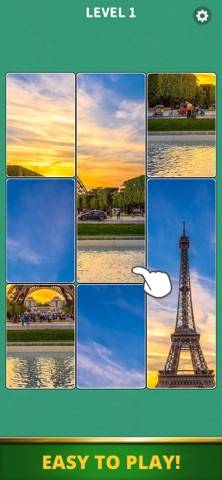
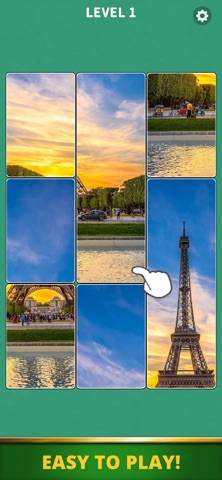
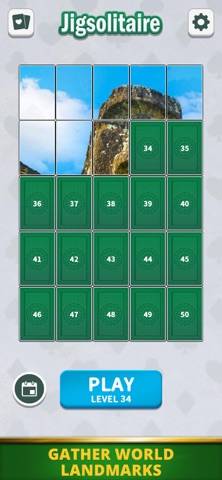
The official image shows sections of scenery on a green surface, including landscape and tower fragments. It supports reconstructing pictures rather than a traditional ace-to-king foundation game.
One reviewer specifically likes the connection mechanic. Another enjoys the mixture of easy and difficult photographs, identifying a reason to value both the gesture and the picture content.
Multiple reviewers want captions identifying a photo’s location. That is a useful request because completing an attractive scene can leave a reader wanting context, not just another puzzle.
A request to submit personal photos is not evidence that importing them is already supported. The listing promises future variety but does not establish a user-image editor.
One long-term account wants more sizes beyond ordinary 4×4 and 6×6 puzzles, except for special challenges. That remains a version-specific observation rather than a present catalog audit.
A supporter likes saving coins for master challenges and replaying old ones. Another dislikes paying coins or points and then still seeing an ad; a separate account reports reduced earnings after an update.
Those reports distinguish access cost from difficulty. They do not establish current rates or prove that every challenging picture requires real-money spending.
Repeating images and repeated restarts are also reported. The broad claim of high replay value should not be treated as universal praise for identical content.
An August reviewer calls them relatively unobtrusive, though still wants removal. Others report mid-puzzle browser openings, loud videos, or an ad that prevents continuing.
A reviewer’s claim that ad blockers are illegal is not adopted as a legal or platform fact. Current removal availability and coverage are unresolved despite several requests to buy it.
The US download is free. One title reports a connection requirement after early levels, but offline behavior and current stability were not tested.
Consider Jigsolitaire for snapping and moving photo groups, with challenge economics and image repetition kept separate from enjoyment of the scenery.
Jigsolitaire has a distinct card-connection mechanic and specific supporters of its photographs. Caption requests reveal genuine engagement, while challenge costs and advertising reports qualify the relaxing-picture proposition.
No. The documented task is assembling photo cards into one picture.
Yes. Group movement is explicitly advertised.
That is not established; a reviewer requesting submissions does not prove an existing feature.
No hands-on gameplay, advertising, purchase, offline, or stability testing.
Gameplay was not playtested. Default score 7.0. This dimension was not playtested, and the default is what the ranking uses.
Ads were not playtested, and this game has no separate store-ad sample. The no-forced-ads tag stays unknown. Default score 7.0. This dimension was not playtested, and the default is what the ranking uses.
Whether a purchase is required to keep playing was not playtested. Default score 7.0. This dimension was not playtested, and the default is what the ranking uses.
Content depth was not playtested. Default score 7.0. This dimension was not playtested, and the default is what the ranking uses.
Stability was not playtested. Default score 7.0. This dimension was not playtested, and the default is what the ranking uses.
No. The documented task is assembling photo cards into one picture.
Yes. Group movement is explicitly advertised.
That is not established; a reviewer requesting submissions does not prove an existing feature.