Store-listing analysis, not a playtest. Based on the saved US App Store listing; the supplied collection contains no customer review bodies for this game (sample N=0; no review date or version window).
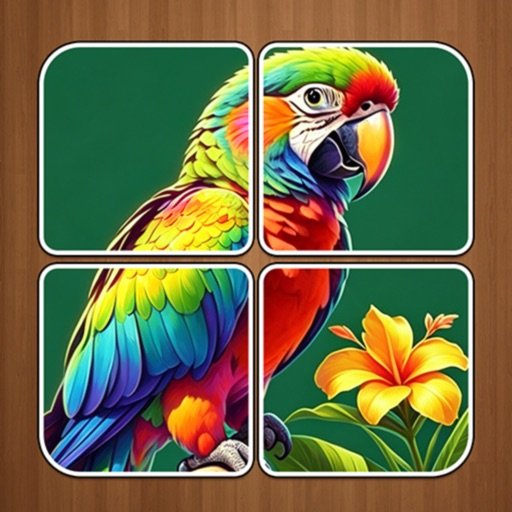
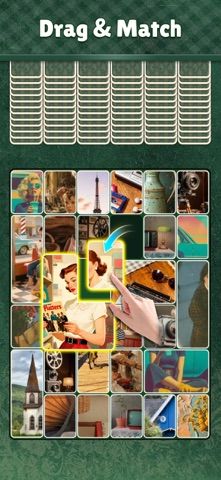
Jigsaw Drop: Solitaire Puzzle treats a picture as something assembled in stages. Completed sections leave the board, new fragments fall in, and the available space keeps changing.
A moving board rather than a static tabletop
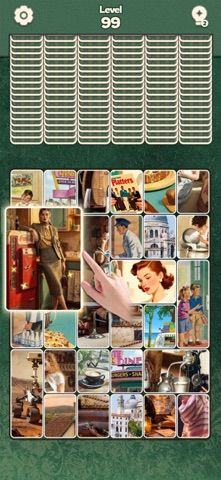
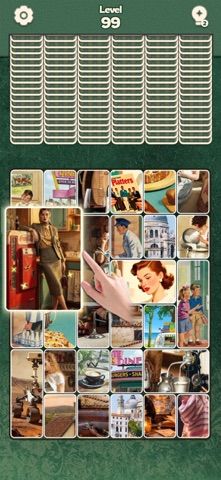
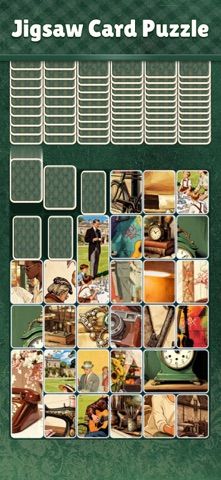
The listed play sequence is to move pieces, connect matching fragments, and complete parts of an image. Completed sections clear away to make room for new pieces. Fresh tiles then fall into place, making the next decision depend partly on what the previous connection removed.
This separates the premise from a conventional jigsaw where every piece remains on a large tabletop until the image is finished. Here, managing space is explicitly part of the challenge. The description does not fully explain piece shapes, legal moves, or how fragments are presented, so traditional interlocking-jigsaw rules should not be assumed.
The “Solitaire” label likewise does not establish a card game. The supplied description focuses on picture fragments and a falling system, not suits, ranks, or card foundations. Readers searching for classic card solitaire should pay more attention to that play guide than to the subtitle.
What the changing layout adds
Clearing a section serves two purposes: completing some of the image and opening room for whatever arrives next. That gives the proposed puzzle an organizing layer alongside visual recognition. It may appeal to players who enjoy picture assembly but want the board to evolve during the process.
Nature scenes, everyday objects, and artistic compositions are advertised as image categories. The listing promises new layouts and no timers. Those describe the intended content and pace; they do not independently establish difficulty, actual round length, or whether later stages introduce other restrictions.
Audience and costs
Consider Jigsaw Drop if arranging picture fragments sounds more engaging when each completion changes the board. Skip it if your preferred jigsaw experience is freely spreading out every piece and leaving the entire finished picture in place.
The saved US download is free. The supplied evidence does not establish ad frequency, purchase prices, hints, or offline access. Claims of responsive controls and satisfying interactions are developer evaluations rather than hands-on impressions here.
Verdict
Jigsaw Drop’s point of distinction is the cycle of assembly, clearing, and falling replacements. It is a candidate for dynamic picture puzzles, not a verified substitute for a traditional tabletop jigsaw.
Frequently asked questions
Is Jigsaw Drop a card solitaire game?
The supplied description discusses picture fragments and falling tiles, not standard playing cards.
Why do completed sections disappear?
The listing says they clear to make room for new pieces as the puzzle evolves.
Does Jigsaw Drop have a timer?
The developer advertises no timers. That statement has not been independently tested.
View the US App Store listing.