G
7.0
Gameplay 30%
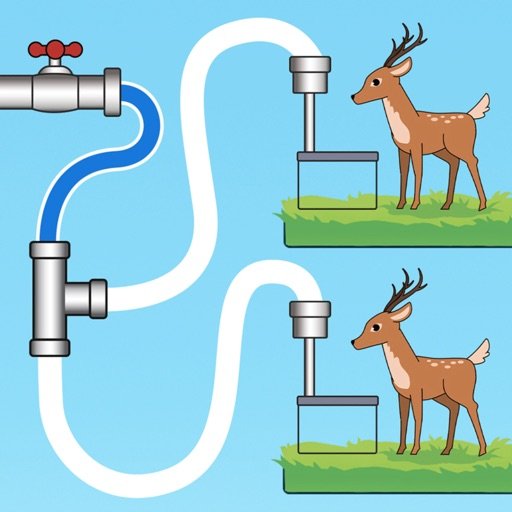
Screenshot impression 7.5/10: Rotating pipes to “Get water to the horses!” is clear, and the red X feedback is readable. Default score 7.0. This dimension was not playtested, and the default is what the ranking uses.



Home / Reviews / brain-riddle / IQ Boost: Training Brain Games
IQ Boost may suit players who enjoy short riddles and unconventional answers. It is not an evidence-backed choice for measuring IQ, diagnosing ability, or obtaining guaranteed cognitive improvement. The playful task collection is the defensible attraction; the bigger brain-training language should be treated cautiously.
Opens the official store and leaves this site. Kids: ask a grown-up before buying anything.
IQ Boost's title makes a bigger promise than its saved evidence can establish. What the listing clearly supports is a collection of tricky, unconventional puzzles—not a validated measure of intelligence or proof that your IQ will rise. This source-based analysis uses the US App Store listing, not hands-on play.
The developer describes logic tasks, brainteasers, funny solutions, and challenges designed to push beyond the first interpretation. The central loop is to examine a task, reconsider the apparent answer, and find the solution that unlocks the next level.
That places it closer to a riddle collection than a single consistent logic system. Different tasks may ask for different approaches, but the supplied description does not give a complete set of examples or a detailed interaction guide. It cannot establish how often solutions are deducible versus surprising guesses.
The appeal is the possibility of a small reversal: noticing an assumption, trying something less obvious, and seeing why the intended answer works. Players who enjoy that kind of joke may find the premise more attractive than people who want every rule stated in advance.
The description refers to memory, attention, abstract thinking, and improving IQ. It also invokes a population statistic about high intelligence. No validation study, standardized scoring method, or evidence of transfer beyond the game is supplied.
That distinction matters when choosing the app. Enjoying a tricky puzzle and improving at the app's own tasks are not the same as a demonstrated change in general intelligence. An in-game result should not be treated as a diagnostic assessment.
There are no usable customer-review bodies in the saved collection. It would therefore be unsupported to say players confirm better memory, enjoy the jokes, or complain that the questions are unfair. Even genuine testimonials would not, by themselves, validate the broader training claim.
The metadata records a free download. The supplied description does not establish advertising frequency, hint costs, subscription terms, or an ad-removal option. The promise of easy controls also does not establish accessibility for every type of task.
A sensible approach is to judge the app first as entertainment and inspect any offers separately. There is no evidence-based reason here to pay for an expected intelligence gain.
IQ Boost may suit players who enjoy short riddles and unconventional answers. It is not an evidence-backed choice for measuring IQ, diagnosing ability, or obtaining guaranteed cognitive improvement. The playful task collection is the defensible attraction; the bigger brain-training language should be treated cautiously.
View the official US App Store listing · How evidence differs from playtesting
No gameplay, ad, purchase, offline, or stability testing performed.
Screenshot impression 7.5/10: Rotating pipes to “Get water to the horses!” is clear, and the red X feedback is readable. Default score 7.0. This dimension was not playtested, and the default is what the ranking uses.
The US App Store lists a remove-ads purchase: Remove Ads ($4.99); Remove Ads ($5.99); Remove Ads ($9.99); plus 2 more. Forced ads were not playtested, so the no-forced-ads tag stays unknown. The store lists a remove-ads purchase, so Ads is drawn from 4.5–6.5. Sampled Ads score 6.0. Not a playtest.
The US App Store lists in-app purchases: Remove Ads ($4.99); Pile of Tips ($1.99); Remove Ads ($5.99); Mountain of Tips ($4.99); plus 5 more. Whether any purchase is required to keep playing was not playtested. Default score 7.0. This dimension was not playtested, and the default is what the ranking uses.
Store content note: The store describes it as “level progression.” The store page does not clearly state a fail state. Default score 7.0. This dimension was not playtested, and the default is what the ranking uses.
Stability was not played. Age rating shown on the store is 4+. App version on the listing is 6.4. Default score 7.0. This dimension was not playtested, and the default is what the ranking uses.

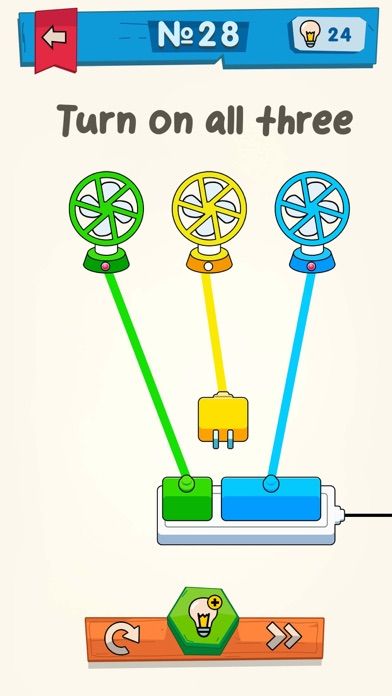
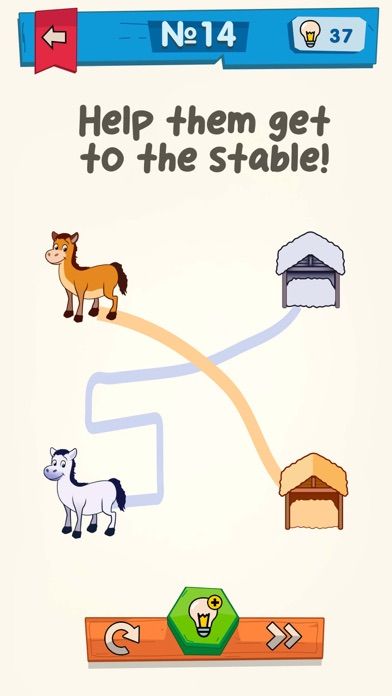
The saved evidence does not establish standardized testing or validation.
No. The listing's improvement claims are not supported by outcome evidence in this dataset.
Tricky logic tasks, brainteasers, and unconventional or humorous solutions.
No. The supplied description does not establish those details.