G
7.0
Gameplay 30%
Gameplay was not playtested. Default score 7.0. This dimension was not playtested, and the default is what the ranking uses.


Home / Reviews / hidden-object-multimode-story / Hidden City: Object Seekers

Hidden City looks most relevant to readers who want a continuing detective setting with varied observation tasks. It is less conclusive for someone requiring verified timers or reliable cross-device recovery. The search-mode distinctions are concrete; the pace, economy, and visual execution remain untested.
Opens the official store and leaves this site. Kids: ask a grown-up before buying anything.
Hidden City offers more than one way to recognize an object. Its listing is unusually specific about search modes, making those differences more useful for comparison than its broad promises of a captivating mystery. This source-based analysis uses the US App Store listing, not hands-on play.
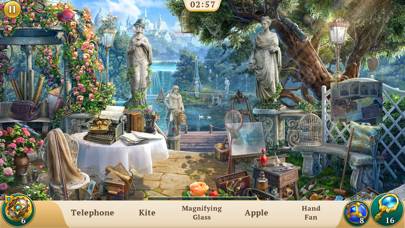
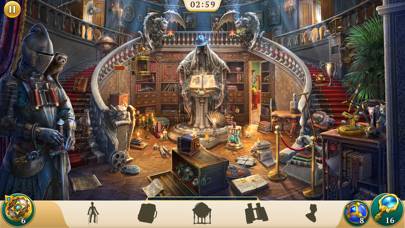
Words mode uses a text list. Silhouettes asks the player to identify shapes. Night mode restricts inspection through a spotlight in a dim scene. Pairs involves identical or logically related objects.
Those are meaningfully different observation tasks. A written name invites recognizing an object from language; an outline emphasizes shape; a spotlight changes how much of the scene can be inspected at once.
The supplied text does not fully document timers, mistake allowances, zoom, or the schedule on which each mode becomes available. A detailed list of modes is still not a complete rulebook.
The City of Shadows contains character quests, magical events, anomalies, and artifact collections. Objects and clues support the investigation rather than only disappearing from a checklist.
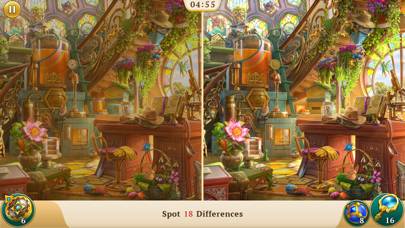
The developer also describes difference spotting, crystal match-3, memory, and logic activities. Those can provide variety for a player who likes a continuing world, but someone seeking only one straightforward search format may value them less.
The claim that side puzzles do not take over the main experience is promotional. Without player evidence or hands-on sessions, the actual balance between searching and surrounding activities is not assessed.
Offline investigation and switching devices through saved progress are both advertised. Neither claim independently establishes every event's availability or a tested restoration procedure.
Someone planning to alternate between devices should check the account and sync requirements rather than assume an offline save automatically appears everywhere. The supplied description does not explain the full process.
No usable customer-review bodies are available here, despite the app's recognizable name. There is no supported player consensus about readability, scene repetition, difficulty, or support.
Optional bonus purchases are explicitly disclosed, and the metadata records a free download. Current prices, ad frequency, removal offers, and practical offline scope remain unverified. No screenshot was inspected, so the described locations remain listing examples rather than observed scenes.
Hidden City looks most relevant to readers who want a continuing detective setting with varied observation tasks. It is less conclusive for someone requiring verified timers or reliable cross-device recovery. The search-mode distinctions are concrete; the pace, economy, and visual execution remain untested.
View the official US App Store listing · How evidence differs from playtesting
No gameplay, ad, purchase, offline, or stability testing performed.
Gameplay was not playtested. Default score 7.0. This dimension was not playtested, and the default is what the ranking uses.
Ads were not playtested, and this game has no separate store-ad sample. The no-forced-ads tag stays unknown. Default score 7.0. This dimension was not playtested, and the default is what the ranking uses.
Whether a purchase is required to keep playing was not playtested. Default score 7.0. This dimension was not playtested, and the default is what the ranking uses.
Content depth was not playtested. Default score 7.0. This dimension was not playtested, and the default is what the ranking uses.
Stability was not playtested. Default score 7.0. This dimension was not playtested, and the default is what the ranking uses.
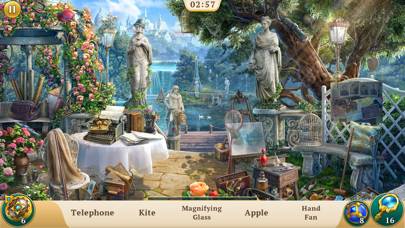
A text list of hidden objects.
The listing describes a spotlight within dim scenes.
Yes. Difference spotting, match-3, memory, and logic activities are advertised.
No. It is a developer claim with incomplete procedural detail.