G
7.0
Gameplay 30%
Gameplay was not playtested. Default score 7.0. This dimension was not playtested, and the default is what the ranking uses.


Home / Reviews / word-path-search / Fillwords: Word Search Puzzles
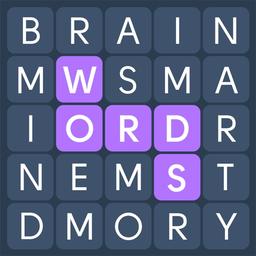
Fillwords is a plausible fit for players who like finding words by tracing letters and prefer flexibility over strict level gating. It is less conclusive for anyone who needs a particular path rule or verified dictionary behavior. The input style and advertised immediate access are its most useful documented distinctions.
Opens the official store and leaves this site. Kids: ask a grown-up before buying anything.
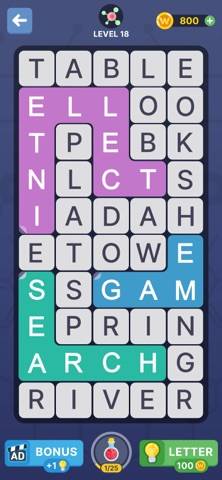
Fillwords describes word finding as a tracing activity. You connect letters with a line to uncover answers, rather than type a guess or work through a conventional crossword clue list. This source-based analysis uses the US App Store listing, not hands-on play.
The listing describes a grid containing hidden words and allows connecting letters in any direction. It advertises more than 2,000 levels, ranging from easier tasks to more demanding puzzles.
That gives the format a visual and vocabulary component. A likely word has to be recognized in the available letters, but recognizing a word and seeing a valid path to trace it are not identical tasks.
The description does not fully explain whether paths can bend within one answer, whether cells can be reused, or whether every cell must belong to a solution. Any-direction language should not be turned into a precise rulebook beyond what it actually says.
The developer says every level is available immediately. If implemented as described, that distinguishes the app from a strictly gated sequence where one difficult puzzle prevents trying anything else.
It may suit someone who prefers choosing a challenge or revisiting a familiar board. It does not independently establish how progress is recorded, whether solutions are replayable, or which assistance is available when a player is stuck.
Ten languages are advertised, including English, French, German, Spanish, and Ukrainian. Language support can broaden the audience, but it does not prove that every dictionary is equally comprehensive or that a particular regional spelling will be accepted.
There are no usable customer-review bodies in this evidence set. It is therefore not possible to report whether players find the vocabulary fresh, paths intuitive, or later levels well graded. The description's claims about attention and thinking speed are not measured outcomes.
Offline play is explicitly promoted. No disconnected session was performed, so the exact scope of that capability remains unverified.
The metadata lists a free download, while the supplied text does not establish ad frequency, purchases, hint pricing, or removal terms. Immediate level access is a progression claim, not a statement that every surrounding feature is free.
Fillwords is a plausible fit for players who like finding words by tracing letters and prefer flexibility over strict level gating. It is less conclusive for anyone who needs a particular path rule or verified dictionary behavior. The input style and advertised immediate access are its most useful documented distinctions.
View the official US App Store listing · How evidence differs from playtesting
No gameplay, ad, purchase, offline, or stability testing performed.
Gameplay was not playtested. Default score 7.0. This dimension was not playtested, and the default is what the ranking uses.
Ads were not playtested, and this game has no separate store-ad sample. The no-forced-ads tag stays unknown. Default score 7.0. This dimension was not playtested, and the default is what the ranking uses.
Whether a purchase is required to keep playing was not playtested. Default score 7.0. This dimension was not playtested, and the default is what the ranking uses.
Content depth was not playtested. Default score 7.0. This dimension was not playtested, and the default is what the ranking uses.
Stability was not playtested. Default score 7.0. This dimension was not playtested, and the default is what the ranking uses.
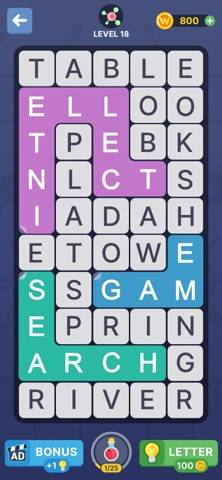
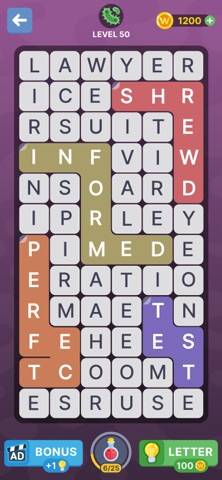
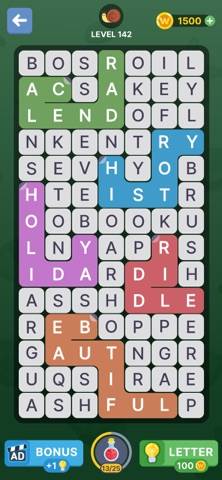
The listing emphasizes connecting letters with a line.
Yes. That is a specific developer claim.
The text says any direction but does not fully define within-word turning rules.
It is advertised, not independently tested.