G
7.0
Gameplay 30%
Gameplay was not playtested. Default score 7.0. This dimension was not playtested, and the default is what the ranking uses.


Home / Reviews / lateral-thinking / Easy Game - Brain Puzzles

Easy Game appeals most when unconventional answers feel playful rather than arbitrary. The sample’s content-exhaustion and hint-video complaints give experienced riddle fans practical checks beyond the cheerful creativity pitch.
Opens the official store and leaves this site. Kids: ask a grown-up before buying anything.
Player-review analysis, not a playtest. Sources: the US App Store listing and 50 US reviews dated 2024-12-16–2026-10-24 (Asia/Shanghai), covering versions 2.26.1, 2.27.0. This limited, self-selected sample is not representative; player reports are not independently verified.
Easy Game - Brain Puzzles is built around changing assumptions. Each illustrated challenge can demand a different interpretation, so a familiar-looking scene is not a promise of conventional rules.
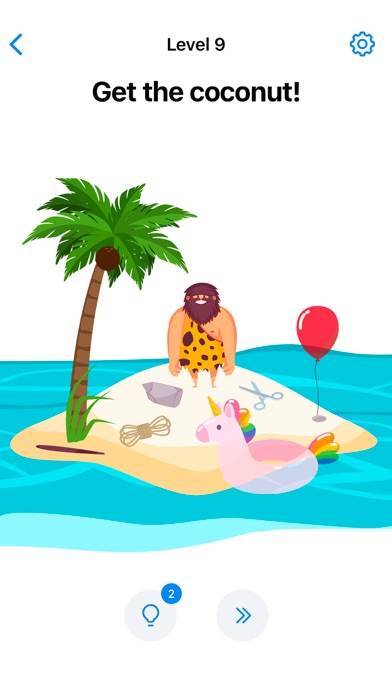
The description emphasizes unexpected solutions, details, and real-life logic. The official image asks the player to get a coconut in an island scene containing a person, tree, and balloon. It provides a goal without establishing the exact solution.
A reviewer calls the game creative and enjoys playing with a parent. Another appreciates that levels differ. These are useful reasons to consider it if surprise itself is part of the fun.
They do not prove that every puzzle uses the same gesture or that a particular visual object must be manipulated. No walkthrough solution is invented from the promotional scene.
Critical reviewers split between finding the puzzles too easy and finding the logic unconvincing. One purchaser wants clearer directions and says hints still leave them guessing without a complete answer.
That is the core suitability question. Readers who enjoy testing unconventional interpretations may welcome the uncertainty; those seeking rules that remain consistent across stages may find it frustrating.
Claims about improving intelligence or memory are not measured outcomes. Positive comments about a brain workout establish enjoyment of mental effort, not cognitive-test results.
Several players say they finished the main collection and want more levels. One enjoys monthly challenges as a substitute, while another finds daily material repetitive. These are dated experiences, not an audited current puzzle count.
The difference between running out and disliking the existing puzzles is important. Requests for more content often come from satisfied players who want a longer reason to return.
A purchaser says the no-ads payment did not remove videos needed for hints. That is a specific entitlement complaint, not proof that every ordinary transition still displayed a commercial after purchase.
Other reviews describe repeated ads between levels, with differing reported intervals. One says a rewarded hint video failed to grant help. Exact frequency, present price, and successful restoration have not been tested.
The US download is free. Offline support is not established; one review requests it and another title complains of a Wi-Fi requirement. Consider Easy Game for short-form conceptual variety, but not a verified duration promise or a guaranteed frustration-free hint system.
Easy Game appeals most when unconventional answers feel playful rather than arbitrary. The sample’s content-exhaustion and hint-video complaints give experienced riddle fans practical checks beyond the cheerful creativity pitch.
The listing emphasizes different mechanics and unexpected solutions rather than one consistent puzzle rule.
One purchaser explicitly says hints still require ads after a no-ads purchase. Current terms are not independently verified.
Several reviewers say they finished it and request more levels, but the current catalog was not counted.
No hands-on gameplay, advertising, purchase, offline, or stability testing.
Gameplay was not playtested. Default score 7.0. This dimension was not playtested, and the default is what the ranking uses.
Ads were not playtested, and this game has no separate store-ad sample. The no-forced-ads tag stays unknown. Default score 7.0. This dimension was not playtested, and the default is what the ranking uses.
Whether a purchase is required to keep playing was not playtested. Default score 7.0. This dimension was not playtested, and the default is what the ranking uses.
Content depth was not playtested. Default score 7.0. This dimension was not playtested, and the default is what the ranking uses.
Stability was not playtested. Default score 7.0. This dimension was not playtested, and the default is what the ranking uses.
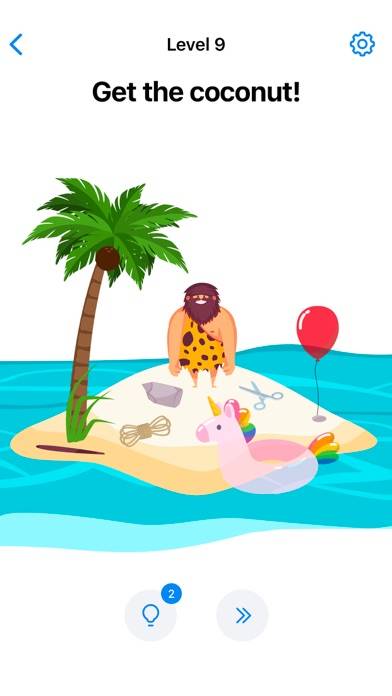
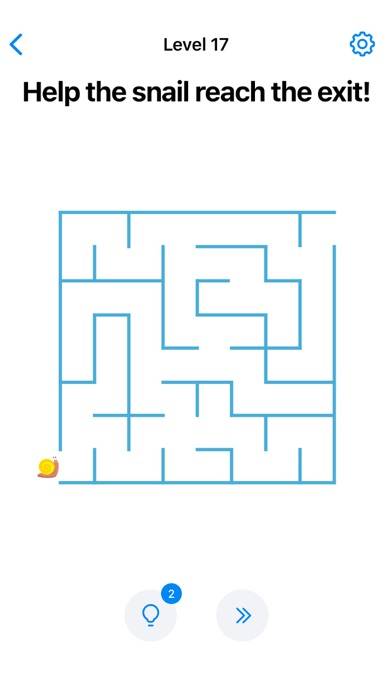
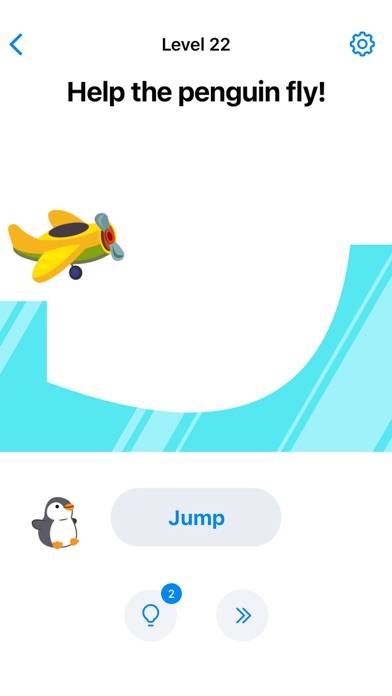
The listing emphasizes different mechanics and unexpected solutions rather than one consistent puzzle rule.
One purchaser explicitly says hints still require ads after a no-ads purchase. Current terms are not independently verified.
Several reviewers say they finished it and request more levels, but the current catalog was not counted.