G
7.0
Gameplay 30%
Gameplay was not playtested. Default score 7.0. This dimension was not playtested, and the default is what the ranking uses.


Home / Reviews / draw-missing-part-riddles / DOP 4: Draw One Part
DOP 4 looks most suitable for players who enjoy interpreting a picture and testing a small, unconventional addition. It is less suitable as a recommendation for free-form drawing or a fully specified logic curriculum. The missing-part interaction is distinctive; answer tolerance and practical access remain untested.
Opens the official store and leaves this site. Kids: ask a grown-up before buying anything.
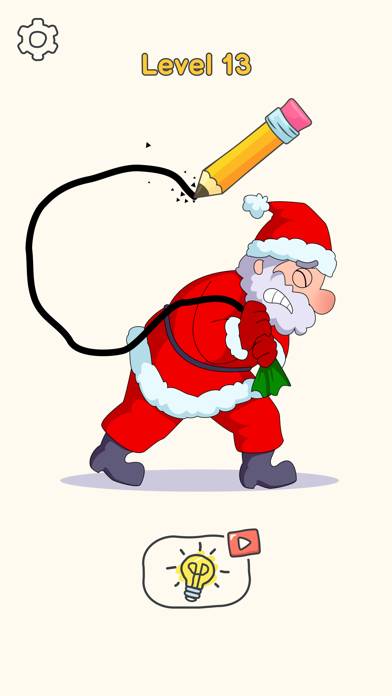
DOP 4: Draw One Part asks for a small addition with a larger meaning. You are not expected to produce a finished artwork; you identify what a prepared picture is missing and supply enough of a line for the game to complete it. This source-based analysis uses the US App Store listing, not hands-on play.
The developer describes using a finger to add a missing outline, after which the app fills in the result. Hints can help with a puzzle whose intended answer is not apparent.
The conceptual work therefore comes before the drawing. You inspect the image, infer what would make sense, and express that idea through a simple stroke. The supplied text emphasizes lateral thinking rather than demanding artistic technique.
That does not establish how forgiving every level is about line shape or placement. It would be inaccurate to promise that any rough attempt will be accepted, or that multiple interpretations always work.
This format may appeal to someone who likes brief visual surprises. It may be less appealing to a player who wants every answer to follow from a clearly stated logical rule. Recognizing the designer's intended missing object can be a different skill from drawing it.
The listing advertises many pictures and situations, but no screenshot was visually inspected. Specific scenes, visual jokes, and art quality are not independently described here.
No customer-review bodies are available in the supplied collection. There is consequently no evidence-based player assessment of answer recognition, repeated ideas, or whether hints explain an answer well.
The developer says progress is saved after each drawing. That is useful for a short-session game, but it is not a verified guarantee about restoring progress after a reinstall or transferring it between devices.
The metadata records a free download. The supplied description does not establish hint costs, ad frequency, removal terms, or offline support. Hints being available does not by itself show that they are unlimited or paid.
The evidence also does not establish an exact penalty for a wrong drawing. It is better to leave that unspecified than borrow the reset rules of another game in the same series.
DOP 4 looks most suitable for players who enjoy interpreting a picture and testing a small, unconventional addition. It is less suitable as a recommendation for free-form drawing or a fully specified logic curriculum. The missing-part interaction is distinctive; answer tolerance and practical access remain untested.
View the official US App Store listing · How evidence differs from playtesting
No gameplay, ad, purchase, offline, or stability testing performed.
Gameplay was not playtested. Default score 7.0. This dimension was not playtested, and the default is what the ranking uses.
Ads were not playtested, and this game has no separate store-ad sample. The no-forced-ads tag stays unknown. Default score 7.0. This dimension was not playtested, and the default is what the ranking uses.
Whether a purchase is required to keep playing was not playtested. Default score 7.0. This dimension was not playtested, and the default is what the ranking uses.
Content depth was not playtested. Default score 7.0. This dimension was not playtested, and the default is what the ranking uses.
Stability was not playtested. Default score 7.0. This dimension was not playtested, and the default is what the ranking uses.
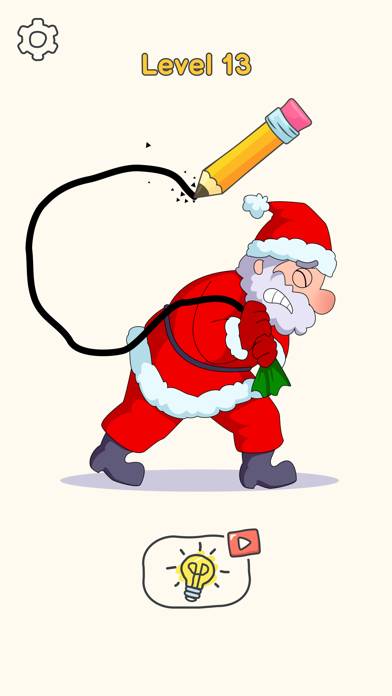
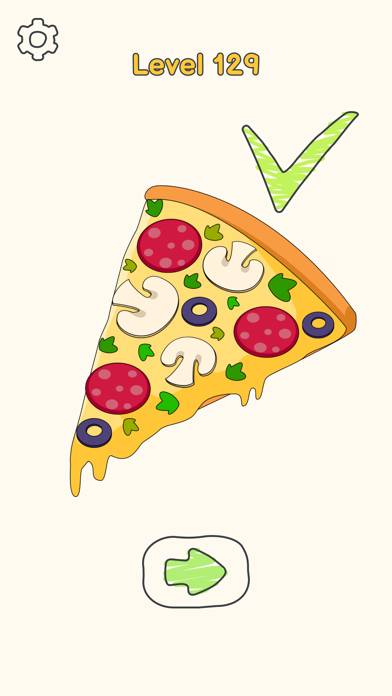
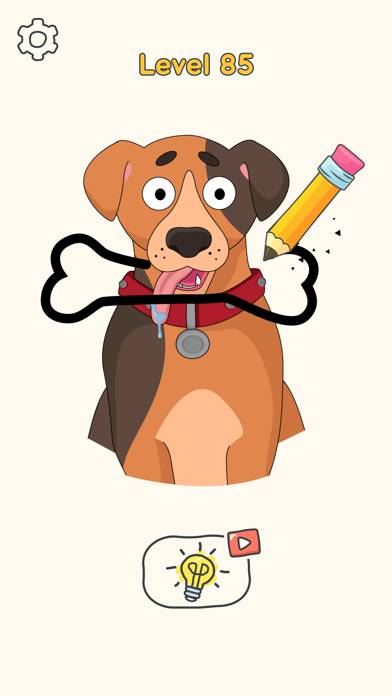
The listing asks for the missing outline and says the game completes the rest.
No. It presents prepared visual riddles with intended solutions.
Yes, but their cost and precise behavior are not fully documented.
No. The listing's after-drawing save claim does not establish device transfer.