G
7.0
Gameplay 30%
Gameplay was not playtested. Default score 7.0. This dimension was not playtested, and the default is what the ranking uses.


Home / Reviews / erase-one-part-riddles / DOP 2: Delete One Part

DOP 2 is a clear concept fit for players who like brief visual riddles and testing an unconventional interpretation. It is less suited to someone seeking open-ended artwork or a fully explained deductive ruleset. The subtractive interaction is distinctive; puzzle quality, answer flexibility, and monetization remain untested.
Opens the official store and leaves this site. Kids: ask a grown-up before buying anything.
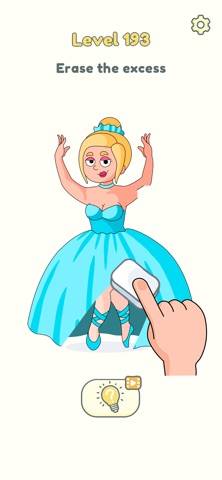
DOP 2: Delete One Part reverses the usual drawing-game instinct. Instead of adding the missing piece, you erase part of an image to reveal what the puzzle wants you to notice. This source-based analysis uses the US App Store listing, not hands-on play.
The developer describes rubbing a finger over a picture to remove a section and uncover a solution. The attraction is visual reinterpretation: the obvious meaning of the image may not be the useful one.
This is not the same as coloring or free drawing. The scene is prepared, and the relevant decision is where to erase. The supplied text does not establish whether every puzzle accepts several approaches or requires one particular region, so the breadth of valid answers remains unknown.
The listing says a mistaken erasure resets the image rather than causing a conventional failure. If implemented as described, that supports experimentation: a wrong hypothesis can be followed by another attempt without abandoning the puzzle. It does not prove that hints or other access conditions are unlimited.
An erase-based riddle can be easy to operate yet difficult to interpret. The finger action is simple, while the intended visual joke or hidden relationship may be less obvious.
That distinction is useful for fit. Someone who enjoys a quick surprise may prefer this format to a long logic grid. Someone who dislikes guessing what a designer intended may find the same premise less satisfying. These are potential tradeoffs, not reports from players; no usable review bodies are available here.
The developer promotes a large collection of illustrations and varied scenarios. No screenshot was visually inspected, so specific scenes, jokes, and image quality are not independently described.
Music, sound effects, and vibration can be turned off according to the listing. Those are concrete comfort options, but muting the game does not automatically establish how advertisements behave.
The metadata records a free download. The supplied description does not establish ad frequency, paid hints, removal terms, or offline operation. The no-failure language concerns the puzzle's response to an incorrect erasure, not a promise that every part of the experience has no limits.
DOP 2 is a clear concept fit for players who like brief visual riddles and testing an unconventional interpretation. It is less suited to someone seeking open-ended artwork or a fully explained deductive ruleset. The subtractive interaction is distinctive; puzzle quality, answer flexibility, and monetization remain untested.
View the official US App Store listing · How evidence differs from playtesting
No gameplay, ad, purchase, offline, or stability testing performed.
Gameplay was not playtested. Default score 7.0. This dimension was not playtested, and the default is what the ranking uses.
Ads were not playtested, and this game has no separate store-ad sample. The no-forced-ads tag stays unknown. Default score 7.0. This dimension was not playtested, and the default is what the ranking uses.
Whether a purchase is required to keep playing was not playtested. Default score 7.0. This dimension was not playtested, and the default is what the ranking uses.
Content depth was not playtested. Default score 7.0. This dimension was not playtested, and the default is what the ranking uses.
Stability was not playtested. Default score 7.0. This dimension was not playtested, and the default is what the ranking uses.
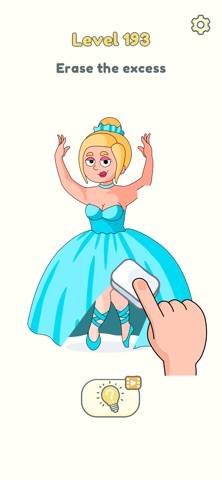
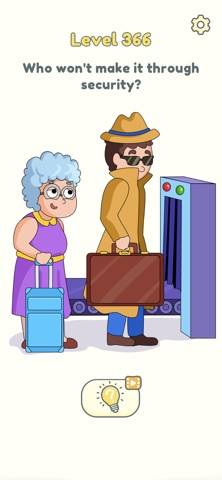
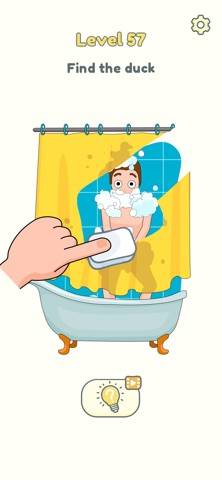
No. The main interaction is erasing part of an existing image.
The listing says the picture resets, allowing another attempt.
Yes. The developer advertises those controls.
No. The supplied text does not establish hint access or pricing.