G
7.0
Gameplay 30%
Gameplay was not playtested. Default score 7.0. This dimension was not playtested, and the default is what the ranking uses.


Home / Reviews / bus-unblock-passenger-sort / Bus Escape: Traffic Jam
Bus Escape: Traffic Jam is most relevant to players who want vehicle-unblocking with an additional passenger-assignment goal. It is less clearly suited to someone whose preference depends on a particular capacity or arrow rule. The combined objective is concrete; the detailed constraints and access economy still require direct confirmation.
Opens the official store and leaves this site. Kids: ask a grown-up before buying anything.
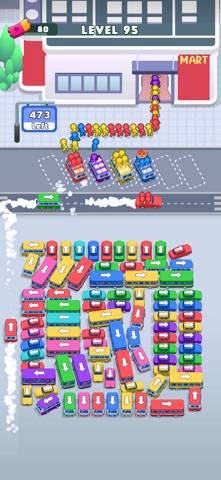
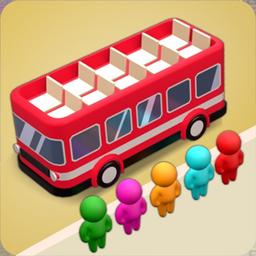
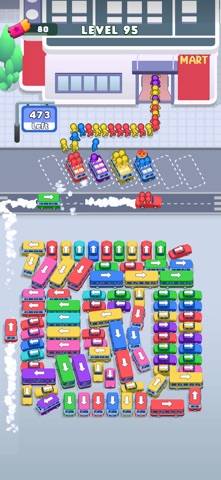
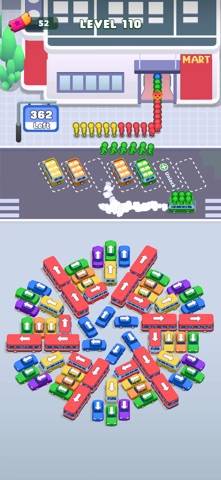
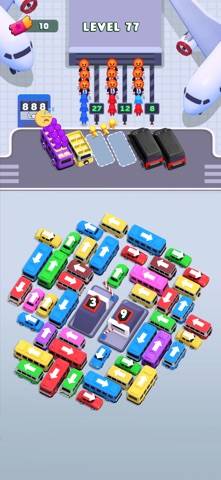
Bus Escape: Traffic Jam combines two ideas that should not be confused: moving vehicles out of congestion and getting passengers onto the correct bus. Its listing is more specific about that combination than a generic traffic-unblocking pitch. This source-based analysis uses the US App Store listing, not hands-on play.
The developer describes moving buses, making routes through a jam, and sorting passengers to the right bus. Obstacles and boosters complicate the sequence as levels progress.
That creates a potential dependency between space and assignment. A bus may be useful because of the passengers it serves, yet still need a route opened before it can help. A vehicle movement that solves a local blockage may not be the best choice for the larger boarding objective.
This is an interpretation of the stated premise, not a verified account of a particular level. The supplied text does not establish seat capacities, exact boarding order, vehicle directions, or whether every bus obeys the same movement restrictions.
Some traffic puzzles use fixed arrows; others allow sliding vehicles along lanes. Some count a small holding area, while others focus on passenger queues. The title and broad genre do not settle which exact constraints apply here.
What is documented is the combination of unblocking and correct-passenger sorting. Someone who enjoys managing both spatial access and a destination relationship may find that more appealing than a pure vehicle puzzle.
Someone who prefers a single, transparent rule system may want to inspect the instructions first. The listing does not provide enough detail to evaluate whether the combined rules feel elegant or complicated in practice.
The description names boosters but does not establish how often they are available, whether they cost currency, or whether currency can be earned without purchases. Their presence does not prove that difficult levels require paid help.
No customer-review bodies are available in this collection. There is no basis for attributing praise, complaints, or claims about difficulty to players. The metadata lists a free download, but advertising, removal offers, and offline behavior remain unverified.
The developer's promise of strategic challenge identifies the intended audience, not a measured account of level design quality.
Bus Escape: Traffic Jam is most relevant to players who want vehicle-unblocking with an additional passenger-assignment goal. It is less clearly suited to someone whose preference depends on a particular capacity or arrow rule. The combined objective is concrete; the detailed constraints and access economy still require direct confirmation.
View the official US App Store listing · How evidence differs from playtesting
No gameplay, ad, purchase, offline, or stability testing performed.
Gameplay was not playtested. Default score 7.0. This dimension was not playtested, and the default is what the ranking uses.
Ads were not playtested, and this game has no separate store-ad sample. The no-forced-ads tag stays unknown. Default score 7.0. This dimension was not playtested, and the default is what the ranking uses.
Whether a purchase is required to keep playing was not playtested. Default score 7.0. This dimension was not playtested, and the default is what the ranking uses.
Content depth was not playtested. Default score 7.0. This dimension was not playtested, and the default is what the ranking uses.
Stability was not playtested. Default score 7.0. This dimension was not playtested, and the default is what the ranking uses.
No. The listing also describes sorting passengers to the correct bus.
No. The supplied description does not establish them.
Yes, but their availability and cost are not fully explained.
No. An advertised booster system is not proof of a universal payment requirement.