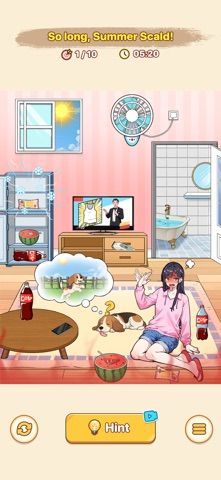
Brain Puzzle 2: Logic Twist asks you to treat a scene as something to experiment with, not merely a question with a written answer. Its sequel pitch centers on stranger stories, interactive clues, and the satisfaction of discovering an unexpected solution. This source-based analysis uses the US App Store listing, not hands-on play.
Read the scene, then try a different interpretation
The developer describes tapping, swiping, dragging, and exploring elements in humorous scenarios. Progress comes from using clues and interactions to solve individual levels. The listing promises unconventional logic and twists rather than a single mathematical system applied repeatedly.
That structure can reward curiosity: an object might matter because of what you can do with it, not just because of what it depicts. The supplied description does not include complete level examples, however, so it cannot establish how consistently solutions follow from visible clues.
The sequel connection is mostly thematic in this evidence. Humorous storytelling and brain-teasing design are carried forward, but the saved text does not establish whether knowledge of the first game is required or precisely how the new levels differ.
Hints help, but their terms are unclear
A helper called Brain Buddy is advertised to provide playful hints. The feature list also says hints are unlimited. That sounds useful for a game whose answers deliberately resist the obvious interpretation, but unlimited availability should not automatically be read as unlimited free access without conditions.
The description does not establish whether hints involve ads, currency, waiting, or payment. It also does not explain how much of a solution a hint reveals. A small nudge and a complete answer create very different experiences in this genre.
There are no saved customer-review bodies to show whether players find the jokes engaging or the logic arbitrary. Claims about accessible controls are likewise developer statements, not an assessment of gesture recognition or motor accessibility.
The appeal—and the potential mismatch
People who like experimenting with a scene may enjoy a puzzle that allows surprise to take precedence over strict formal rules. Players looking for a clean chain of deductions may prefer a more transparent system. The listing's references to trending jokes could also be more appealing to some audiences than others.
The recorded download price is free, but advertising frequency and purchase details remain unverified. Simple controls and lighthearted writing do not answer those questions.
Verdict
Brain Puzzle 2 is a plausible choice for fans of interactive riddles and absurd little stories. It is less clearly suited to anyone who wants every answer justified by stable, explicit rules. The Brain Buddy system could reduce frustration, but the evidence does not establish what that assistance actually costs or how well it works.
FAQ
How do you interact with puzzles?
The listing describes tapping, swiping, dragging, and exploring objects in each scene.
What is Brain Buddy?
It is the advertised hint helper for getting past difficult situations.
Are unlimited hints necessarily free?
No. The description does not establish the conditions attached to that claim.
Does it use traditional logic-grid rules?
The listing instead emphasizes scene-based interaction and unconventional solutions.
View the official US App Store listing · How evidence differs from playtesting